
India is a country where traditions, languages, religions and lifestyles vary from one region to another. For foreign tourists, exploring India can be an exciting experience, from visiting historic monuments and colourful markets to enjoying traditional meals with local families. However, understanding a few basic rules of Indian cultural etiquette can make your journey more comfortable and help you connect respectfully with local communities.
Whether you are visiting Delhi, Agra, Jaipur or other parts of the country, knowing how people greet each other, dress at religious places, share meals and interact socially can help you avoid misunderstandings. You do not need to know every Indian tradition before arriving, but a little cultural awareness can make a meaningful difference.
1. Understand Indian Greetings and Social Customs
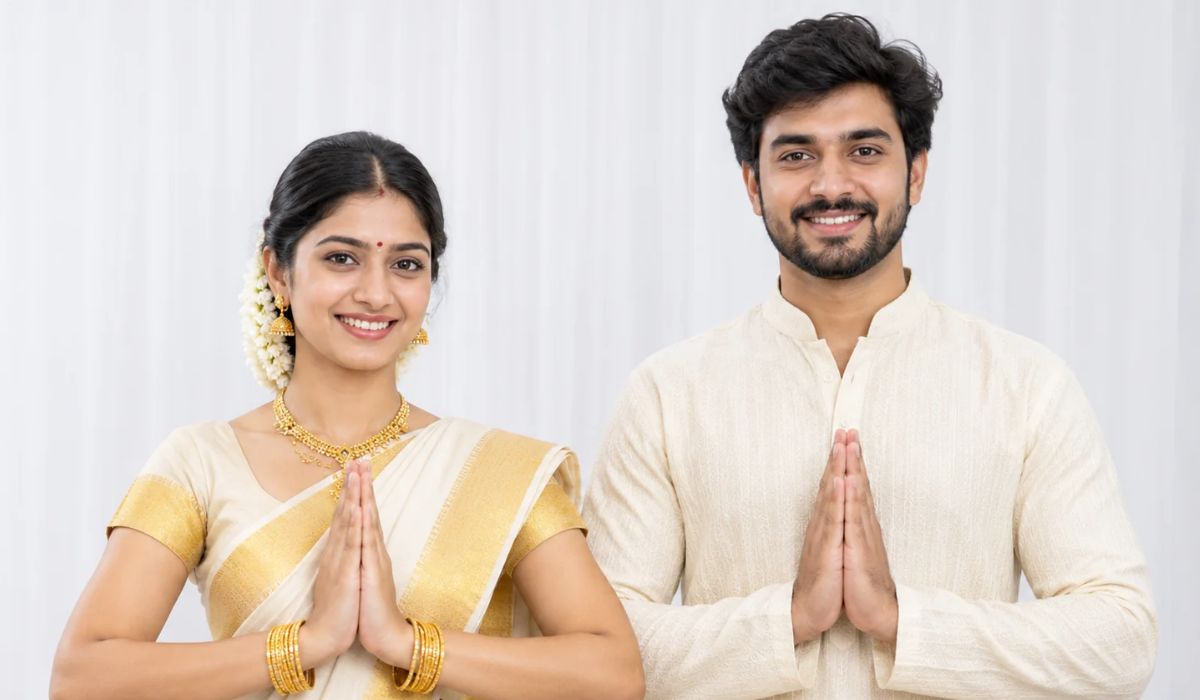
Greetings are an important part of everyday interactions in India. One of the most recognised traditional greetings is “Namaste”, which is commonly accompanied by bringing both palms together near the chest and slightly bowing the head.
You may hear people use different greetings depending on their language, religion and region.
Here are a few useful expressions:
- Namaste: A respectful and widely recognised greeting.
- Namaskar: Another polite form of greeting.
- Shukriya: Thank you, commonly understood in Hindi and Urdu-speaking settings.
- Dhanyavaad: Thank you in Hindi.
Handshakes are also common, particularly in professional and urban settings. However, some people may prefer a traditional greeting instead.
When meeting someone for the first time, observe their greeting style and respond naturally. Avoid assuming that everyone is comfortable with physical contact, particularly when interacting with people of different ages and backgrounds.
2. Dress Respectfully at Religious Places
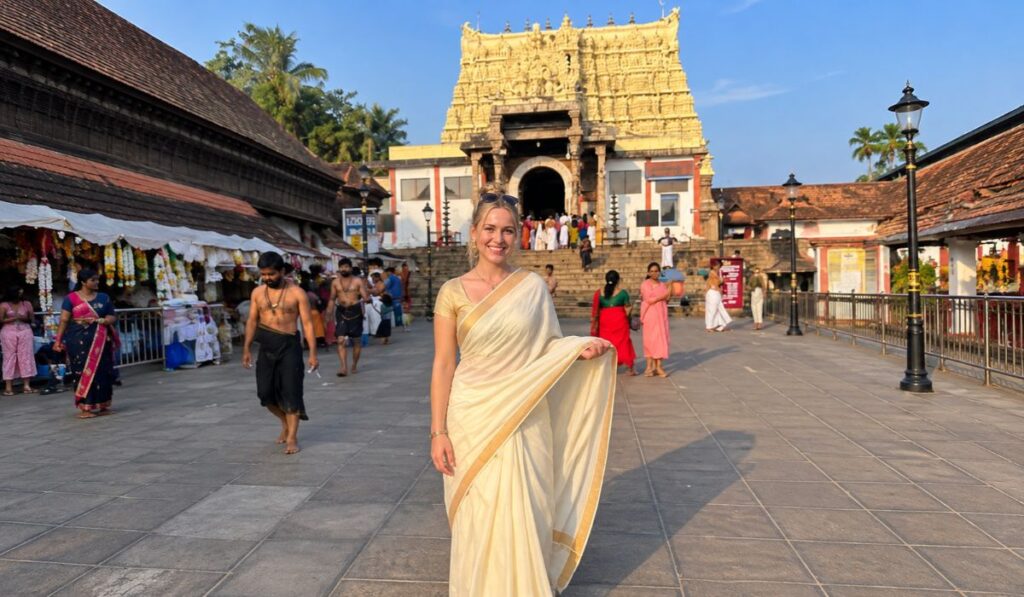
India is home to temples, mosques, churches, gurudwaras and other religious places. Each may have its own expectations regarding clothing and visitor behaviour.
While dress codes vary, modest clothing is generally appreciated when visiting religious sites.
Some useful suggestions include:
- Choose clothing that covers your shoulders and knees when appropriate.
- Carry a scarf or shawl for additional coverage.
- Remove your shoes before entering places where required.
- Follow instructions displayed near entrances.
- Avoid wearing clothing with offensive messages or imagery.
For example, visitors exploring the Taj Mahal should understand that it is a historic monument rather than a temple, so its visitor requirements differ from those of religious sites.
Before visiting religious attractions, check the specific entry rules and local expectations.
You can also read our guide on what to wear at the Taj Mahal for practical clothing suggestions.
3. Follow Local Customs When Visiting Temples and Religious Sites
Religious places are important parts of Indian cultural life. Visitors are welcome at many sites, but respectful behaviour is essential.
Different religious institutions may have different rules, so it is important to follow local instructions.
Keep these points in mind:
- Remove footwear wherever requested.
- Keep your voice low inside prayer areas.
- Do not interrupt people who are praying.
- Ask before photographing religious ceremonies or worshippers.
- Avoid touching religious objects unless permission is given.
- Follow restrictions on photography and mobile phone use.
At some temples, visitors may be asked to cover their heads. In many Sikh gurudwaras, covering the head and removing shoes are customary requirements for visitors.
Remember that you are entering a place of worship, not simply another tourist attraction. Showing consideration for people who are praying is one of the easiest ways to demonstrate cultural respect.
4. Understand Indian Dining Etiquette

Food is an important part of Indian hospitality. Meals are often shared with family members and guests, and offering food is a common way of welcoming visitors.
If you are invited to eat with an Indian family, a few simple customs can help you feel more comfortable.
Eat with Your Right Hand
In many traditional Indian dining settings, people use their right hand for eating, particularly when enjoying dishes such as roti, rice and curries.
The left hand may be considered less appropriate for handling shared food in some traditional households.
However, using cutlery is perfectly acceptable, especially in restaurants and hotels.
Accept Food Politely
Your host may offer additional servings as a gesture of hospitality. You can accept if you wish, but you are not required to finish everything offered.
If you are full, a polite explanation is usually enough.
Ask About Ingredients
Indian cuisine includes a wide variety of vegetarian and non-vegetarian dishes. Some foods may contain dairy products, nuts, meat or other ingredients that you may want to avoid.
If you have dietary preferences or allergies, communicate them clearly before ordering.
Try Local Food at Your Own Pace
India has many regional cuisines, from Punjabi dishes in North India to traditional meals in South India.
You can explore local flavours while choosing food that suits your preferences and comfort.
5. Ask Permission Before Taking Photographs
India offers countless photography opportunities, including colourful markets, historic architecture, traditional celebrations and everyday street scenes.
However, not everyone wants to be photographed.
Before taking pictures of local residents, shopkeepers, street performers or religious ceremonies, ask for permission.
A few simple practices can help:
- Ask before taking close-up photographs of individuals.
- Respect people who decline.
- Check photography restrictions at monuments and religious sites.
- Avoid photographing private ceremonies without permission.
- Follow instructions regarding cameras and mobile phones.
At popular attractions such as the Taj Mahal, visitors should also follow the monument’s photography rules, particularly in restricted areas.
Being considerate helps you enjoy photography without making others uncomfortable.
6. Understand Personal Space and Physical Contact
Social interactions in India can feel different from those in Canada, the United States or European countries.
People may stand closer during conversations, particularly in crowded markets, public transport and busy streets.
However, personal boundaries still matter.
Public displays of affection are generally more reserved in many traditional settings, although attitudes vary considerably between communities and urban areas.
When interacting with strangers, avoid assuming that everyone is comfortable with hugs, kisses or other physical contact.
A friendly greeting and respectful conversation are usually sufficient.
7. Learn the Importance of Removing Shoes
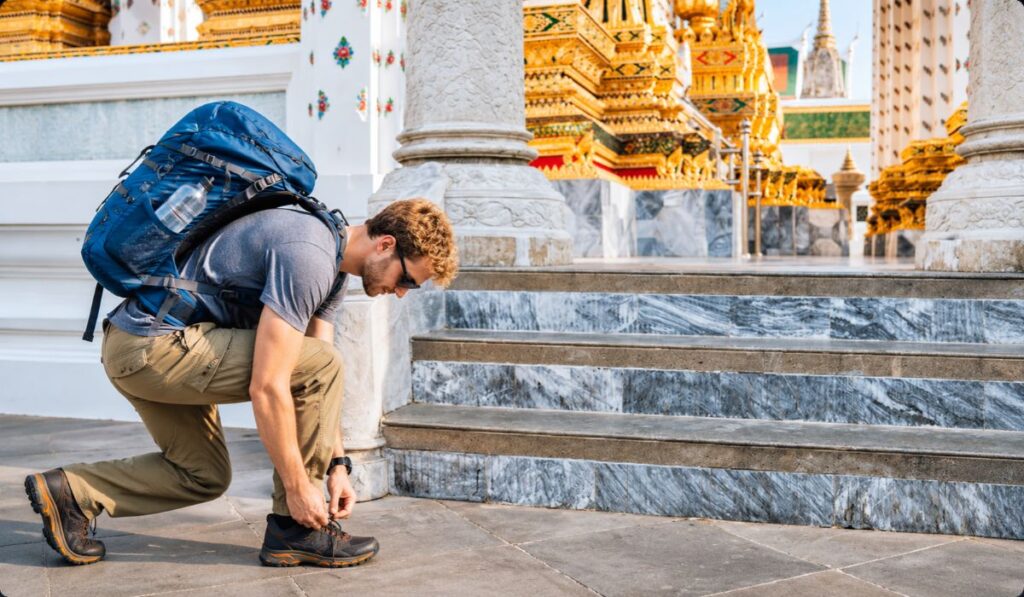
Removing footwear is a common custom in many Indian households and religious places.
If you visit someone’s home, observe whether footwear is left near the entrance. Your host may also request that you remove your shoes before entering.
You may encounter similar requirements at temples, gurudwaras and certain other cultural spaces.
For convenience, wear footwear that is easy to remove and put back on, especially when visiting several religious attractions during one day.
Some sites provide designated shoe storage areas, while others may have different arrangements.
8. Respect Local Traditions and Festivals
India celebrates numerous religious and cultural festivals throughout the year.
Diwali, Holi, Eid, Christmas, Durga Puja and Navratri are among the widely celebrated occasions, although celebrations differ across regions and communities.
For foreign tourists, attending a festival can provide a valuable opportunity to understand local culture.
However, participation should always be respectful.
For example:
- During Holi, ask before applying colours to strangers.
- During religious celebrations, respect prayer areas and ceremonies.
- Dress appropriately when attending traditional events.
- Follow local instructions during public gatherings.
- Avoid interrupting religious rituals for photographs.
Festivals can also affect transport, accommodation availability and opening hours, so check local arrangements before travelling.
9. Understand Tipping and Hospitality Customs
Tipping practices in India vary depending on the location, service and type of establishment.
Some restaurants include a service charge, while others leave tipping entirely to the customer.
You may also encounter tipping customs involving hotel staff, drivers, guides and porters.
Keep these points in mind:
- Check your restaurant bill before leaving an additional tip.
- Tipping is generally discretionary rather than compulsory.
- Carry some smaller cash denominations for situations where a tip is appropriate.
- Ask your tour operator about customary tipping expectations for drivers and guides.
Do not feel pressured to tip every person you meet. A polite thank-you and respectful behaviour are also appreciated.
10. Avoid These Common Cultural Mistakes in India
Understanding what to avoid can be just as important as learning local customs.
Here are some mistakes foreign tourists should try to avoid:
| Common mistake | Better approach |
|---|---|
| Entering a religious place with shoes | Check footwear requirements first |
| Photographing strangers without permission | Ask before taking photographs |
| Wearing inappropriate clothing at religious sites | Choose modest clothing |
| Using your left hand for shared food in traditional settings | Prefer your right hand where customary |
| Speaking loudly inside places of worship | Keep your voice low |
| Touching religious objects without permission | Follow local instructions |
| Making assumptions about Indian traditions | Remember that customs vary by region |
| Ignoring local festival rules | Observe and respect local practices |
A little awareness can help you avoid uncomfortable situations and make your interactions with local people more positive.
11. Respect Regional Differences Across India
One important thing foreign tourists should understand is that India does not have a single set of customs followed by everyone.
Traditions, languages, food habits and social expectations can change significantly between regions.
For example, clothing preferences and dining traditions in Rajasthan may differ from those in Kerala or West Bengal.
Similarly, religious practices in North India may differ from those in South India.
Even within the same city, customs can vary between families and communities.
Instead of assuming that one experience represents the entire country, approach every destination with curiosity and an open mind.
Frequently Asked Questions About Indian Cultural Etiquette
1. Is Namaste an appropriate greeting for foreign tourists in India?
Yes. Namaste is a widely recognised and respectful greeting. Foreign visitors can comfortably use it when meeting local people, although a simple hello or handshake may also be appropriate depending on the situation.
2. What should tourists avoid wearing in India?
There is no single clothing rule for the entire country. However, modest clothing is generally advisable when visiting religious places and traditional communities. Visitors should follow specific dress requirements where they apply.
3. Is it rude to eat with your left hand in India?
In some traditional settings, using the right hand for eating and handling shared food is customary. However, dining practices vary, and using cutlery is perfectly acceptable in many restaurants and hotels.
4. Can foreign tourists take photographs of local people in India?
Yes, but it is respectful to ask permission before photographing individuals, particularly in markets, residential areas and religious settings. Always follow photography restrictions at specific attractions.
5. Should tourists remove their shoes before entering Indian homes?
In many Indian households, removing shoes before entering is customary. Look for footwear near the entrance or politely ask your host what they prefer.
6. Is tipping compulsory in India?
No. Tipping is generally discretionary and depends on the service and establishment. Check whether a service charge is already included before deciding to leave an additional tip.
7. What is the most important cultural rule for foreign visitors in India?
Respect local traditions, religious practices and personal boundaries. Being polite, asking questions when unsure and remaining open to different customs can make your experience much more enjoyable.
Final Thoughts: Experience India with Cultural and Understanding of Indian Cultural Etiquette
Travelling through India is about more than visiting famous monuments and taking photographs. It is also an opportunity to experience local hospitality, regional traditions, traditional food and everyday cultural life.
Understanding basic Indian cultural etiquette can help foreign tourists interact more comfortably with local communities and appreciate the country beyond its popular attractions.
Whether you are exploring the historic streets of Delhi, visiting the Taj Mahal in Agra or discovering the royal heritage of Jaipur, approach each experience with curiosity and respect.
With a little preparation and an open mind, your journey through India can become a much more meaningful travel experience.