Planning a visit to the Taj Mahal in Agra? Choosing what to wear at the Taj Mahal can make your sightseeing experience more comfortable, especially when walking through the gardens and taking photographs. The best outfit depends on the weather, your personal style and how much time you plan to spend outdoors.
From lightweight summer clothing to traditional Indian outfits and coordinated looks for couples, there are plenty of options to consider. This guide covers Taj Mahal outfit ideas, suitable colours for photographs, seasonal clothing tips and practical advice about visitor rules.
Many travelers opt for an early morning experience to beat the crowds and heat. A Taj Mahal Sunrise Tour is a popular choice, and dressing appropriately for the cool morning hours is key.
Taj Mahal Dress Code – Quick Guide
- No strict official dress code
- Modest clothing recommended (shoulders & knees covered)
- Remove shoes or wear shoe covers inside the main mausoleum
- Comfortable walking shoes essential
- Small bags only (security restriction)
Is There a Dress Code at the Taj Mahal?
There is no strictly enforced official dress code for the Taj Mahal complex. Unlike some religious sites in India, you won’t be turned away at the gate for wearing shorts or a sleeveless top. However, an unwritten rule of modesty is widely observed.
The Taj Mahal is a mausoleum—a place of deep cultural and historical importance. The Archaeological Survey of India (ASI) recommends dressing modestly out of respect.
Key points to remember:
- Shoulders: Keep them covered. Tank tops are allowed but not culturally preferred.
- Knees: Shorts or skirts should fall at or below the knee.
- Footwear: You must remove shoes or wear disposable shoe covers when entering the main marble mausoleum.
- Comfort: The complex covers a large area. You’ll walk roughly 2–3 kilometers through gardens, the mosque, and gateways.
Dressing modestly shows respect and makes your visit smoother.
Why Dressing Properly Matters at the Taj Mahal
Choosing the right outfit goes beyond rules—it directly affects your experience.
Cultural Respect
India has deep‑rooted traditions. The Taj Mahal is a sacred tomb, not just a tourist attraction. Dressing respectfully shows appreciation for local culture and helps you feel more comfortable in crowded areas.
Walking Distances
From the main gate to the mausoleum platform, you’ll walk across sandstone paths, marble plinths, and steps. Tight or restrictive clothing turns that walk into a chore. Loose, breathable fabrics give you freedom of movement.
Weather Conditions
Agra experiences extreme weather. Summers (April–June) exceed 40°C (104°F); winters (December–February) can be foggy and cold. Your outfit must protect you from the sun or keep you warm, depending on the season.
Photography
You’ll take dozens of photos. The white marble acts as a giant reflector, bouncing light onto you. The right colors and styles keep you looking fresh and vibrant, not washed out or uncomfortable.
Best Clothes to Wear at Taj Mahal
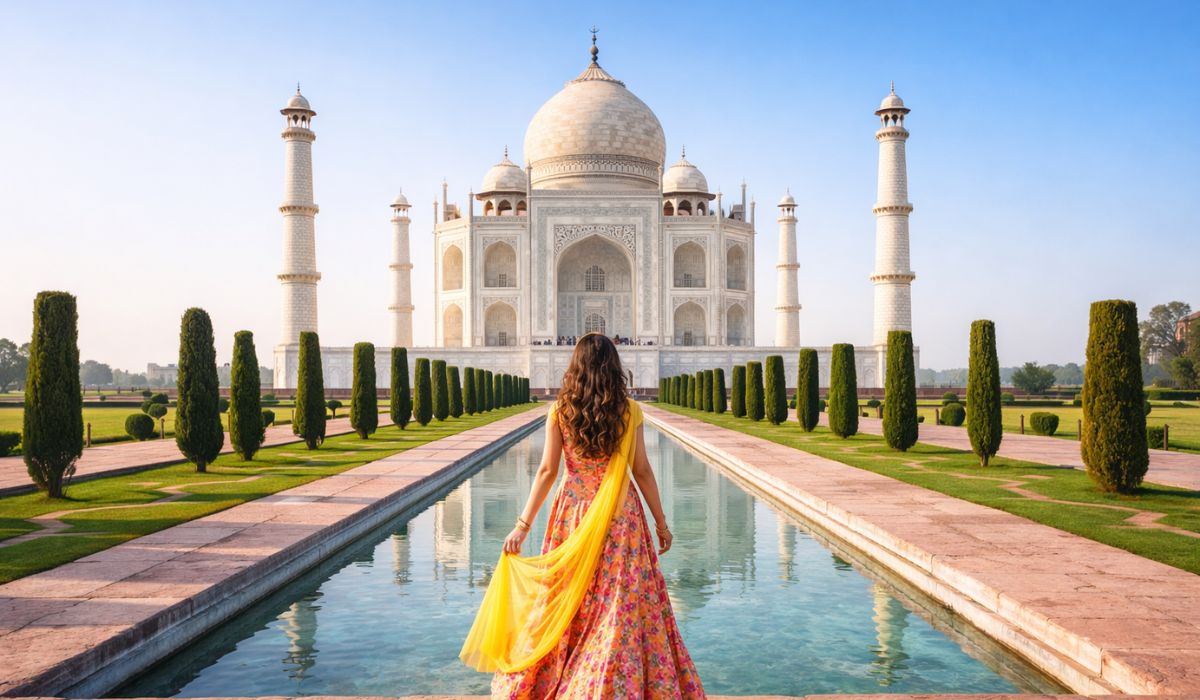
When deciding what to wear at Taj Mahal, prioritize comfort, breathability, and a relaxed fit. You want clothing that lets you sit on marble steps and walk for hours without irritation.
Comfortable Clothing
Stick to loose‑fitting garments made from natural fibers.
- Cotton shirts: Light‑colored, long‑sleeve options protect from sunburn.
- Linen trousers: Breathable, quick‑drying, and elegant in photos.
- Maxi dresses: A one‑piece solution that covers knees and looks great.
- Palazzo pants: Wide‑legged and airy; pair with a simple cotton top.
Traditional Indian Clothing Options
Wearing traditional attire is a wonderful way to immerse yourself in the culture. These garments are designed for India’s climate.
- Kurtis: Long tunics that meet modesty requirements; comfortable with leggings or trousers.
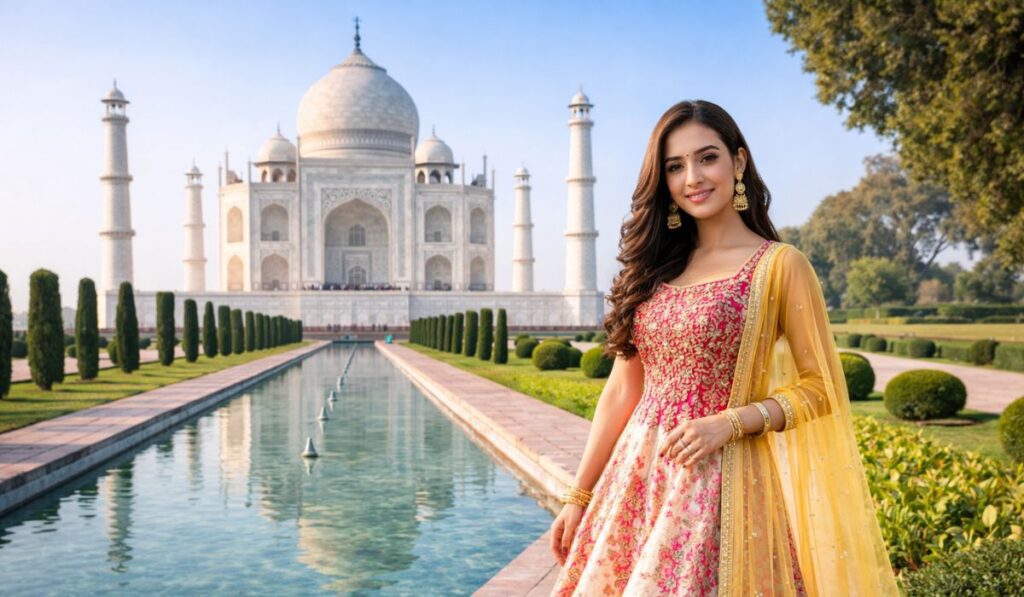
- Anarkali suits: Flowing, elegant dresses perfect for stunning photos.
- Salwar kameez: A tunic with loose trousers—ideal for long sightseeing days.
Taj Mahal Dress Ideas for Women
Looking for Taj Mahal outfit ideas for women? Choose comfortable clothing that suits the weather and your personal style.
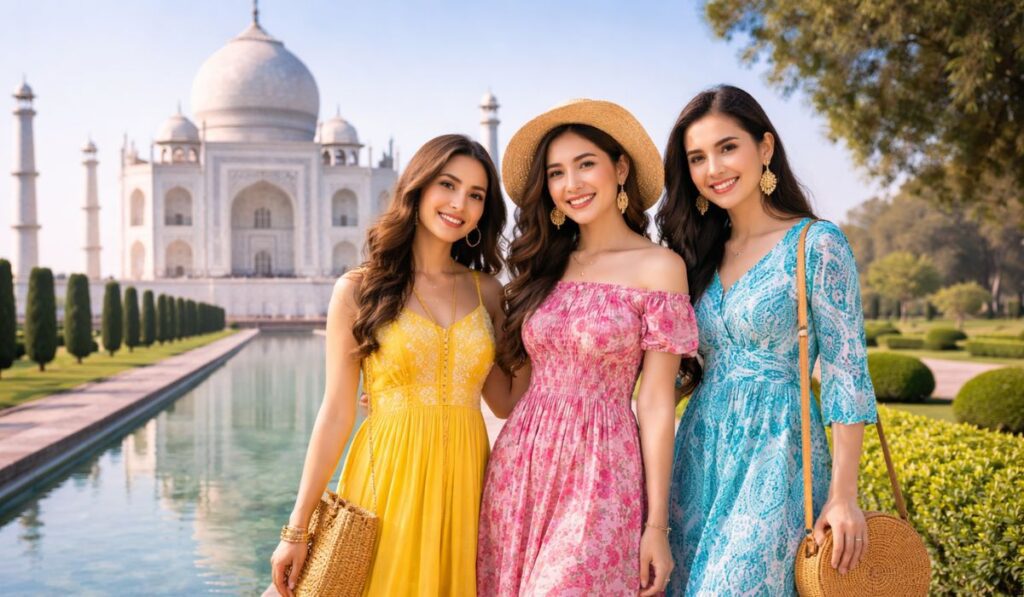
- Floral maxi dress: A relaxed option for travel photographs.
- Kurta with palazzo pants: A comfortable combination with a traditional touch.
- Linen trousers with a blouse: A practical choice for warm weather.
- Anarkali suit: An option for visitors who prefer traditional Indian clothing.
Pastel blue, dusty pink, sage green and earthy shades can all work well against the white marble. Choose comfortable footwear and clothing that allows you to move freely during your visit.
Taj Mahal Dress Ideas for Couples
Couples visiting the Taj Mahal can coordinate their outfits by choosing complementary colours rather than wearing identical clothing. This creates a balanced look for photographs while allowing each person to express their own style.
Consider these combinations:
- Beige and sage green: A subtle, coordinated look.
- Blue and white: A fresh combination for daytime photographs.
- Dusty pink and cream: A soft colour pairing.
- Olive green and earthy brown: A relaxed, natural combination.
Choose comfortable fabrics and footwear so that both partners can enjoy walking around the monument without worrying about their outfits.
Footwear Tips for Visiting the Taj Mahal
Footwear is critical to your comfort and compliance with the Taj Mahal dress code inside the mausoleum.
The Shoe Rule
Inside the main mausoleum (where the tombs of Mumtaz Mahal and Shah Jahan lie), you must either:
- Remove your shoes and carry them, or
- Wear disposable shoe covers (provided free by security).
Most visitors choose the shoe covers—they keep your socks clean and are more convenient.
Recommended Footwear
- Sneakers / trainers: Best for comfort and support; work well with shoe covers.
- Sturdy sandals: Great for summer; avoid flip‑flops that slip on smooth marble.
- Slip‑on shoes: Easy to remove if you decide to go barefoot.
Avoid: High heels (dangerous on uneven marble) and new, unbroken‑in shoes.
Best Colours to Wear at the Taj Mahal
Choosing the best colour to wear at the Taj Mahal depends on your personal style and the look you want in your photographs. Because the monument is made of white marble, colours such as blue, pink, green and red can create an appealing contrast.
- Blue: Creates contrast against the white marble.
- Pink: Works well for a softer, pastel-inspired look.
- Green: Complements the surrounding gardens.
- Red: Creates a bold visual contrast.
- Beige and cream: Offer a more understated appearance.
There is no single best colour for everyone. Consider the lighting, background and weather when choosing your outfit.
Best Outfit Colors for Taj Mahal Photos
The Taj Mahal changes color throughout the day—soft pink at sunrise, brilliant white at noon, golden at sunset. To stand out against this iconic backdrop, color choice is key.
Why Color Matters
White clothing blends into the marble. Black absorbs heat and creates harsh silhouettes. Bright colors contrast beautifully.
Best Colors to Wear
- Red: The most iconic choice—red was the favorite color of the Mughal emperors and pops against white marble.
- Yellow: Vibrant and cheerful; symbolizes happiness.
- Blue: Royal or pastel blue complements the sky and marble.
- Pastel colors: Peach, lavender, and soft pink create a romantic, dreamy look.
- Orange: High contrast that makes your photos stand out.
Avoid: Black, white, or dull grey if you want your photos to shine.
What NOT to Wear at the Taj Mahal
While no strict enforcement exists, avoiding these items makes your visit smoother.
- Very short shorts – knee‑length or longer is best.
- Revealing clothing – low‑cut tops, crop tops, or backless outfits are discouraged.
- Heavy jewelry – metal detectors at security cause delays; leave valuables in your hotel safe.
- Uncomfortable shoes – heels or stiff leather will ruin your day.
- Large bags – backpacks are prohibited; carry only a small crossbody or handbag.
What to Wear in Agra by Season
If you’re wondering what to wear in Agra, start by checking the forecast for your travel dates. Agra’s hot summers, humid monsoon weather and cooler winter mornings call for different clothing choices.
Summer (April–June)
Summer: Choose breathable cotton clothing, lightweight dresses and loose-fitting trousers.
Weather: Extremely hot, dry, sunny; above 40°C (104°F).
Fabrics: Pure cotton, linen, chambray—avoid synthetics.
Clothing: Loose, light colors; wide‑brimmed hat; sunglasses; a cotton scarf for sun protection.
Monsoon (July–September)
Monsoon: Consider quick-drying fabrics, comfortable footwear and a lightweight rain layer.
Weather: High humidity and sudden heavy rain.
Clothing: Quick‑dry fabrics; avoid jeans (heavy when wet).
Footwear: Waterproof sandals that can handle mud; carry a lightweight poncho.
Winter (October–March)
Winter: Wear comfortable clothing with a removable sweater or jacket for cooler mornings.
Weather: Best time to visit. Mornings can be 5–10°C (41–50°F) in December–January; afternoons pleasant.
Layering: T‑shirt, light sweater, jacket, and a woolen scarf (pashmina) for sunrise visits. Remove layers as the day warms.
Essential Accessories for Taj Mahal Visitors
Pack these accessories in your small bag to stay comfortable and prepared.
- Sunglasses – white marble reflects intense sunlight.
- Hat or cap – wide‑brimmed for shade and style.
- Sunscreen – high SPF; apply to face, neck, and hands.
- Water bottle – stay hydrated; only clear plastic bottles allowed (reusable steel often prohibited).
- Small bag – leave large backpacks in your Taj Mahal tour vehicle or hotel; a crossbody or fanny pack works best.
What Tourists Often Forget to Wear
Even with a solid packing list, some essentials are frequently overlooked. Adding these items ensures you’re fully prepared.
- Hat or wide‑brimmed cap: Protects against intense sun during midday visits.
- Polarized sunglasses: Reduces glare from the white marble, making it easier to admire details.
- High‑SPF sunscreen: Reapply throughout your visit, especially on the neck and arms.
- Breathable fabrics: Cotton, linen, and bamboo blends keep you cool in summer and wick moisture during monsoon.
- Lightweight scarf (dupatta): Doubles as a sun shield, a modesty cover for shoulders, and a stylish accessory for photos.
Extra Travel Tips for Visiting Taj Mahal
These practical tips complete your Taj Mahal visitor guide.
- Closed on Friday: The Taj Mahal is closed every Friday for prayers (except for the mosque).
- Security checks: Only small bags, phones, wallets, and water bottles allowed. No tripods, selfie sticks, or power banks.
- Avoid large bags: A cloakroom exists but is crowded. Leave luggage at your hotel or in your vehicle.
- Book tickets online: Skip long lines—purchase entry tickets in advance.
- Sunrise visits: The best time for soft light, fewer crowds, and cooler temperatures. Consider a sunrise Taj Mahal tour for the optimal experience.
- Guides: Government‑approved guides at the entrance add historical depth and know the best photo spots.
If you’re planning a broader exploration of North India, combine Agra with Delhi and Jaipur. A Golden Triangle Tour covering these three cities is a classic itinerary. For those based in Delhi, a convenient Same Day Taj Mahal Tour by Car lets you experience the monument without changing hotels. You can also browse our India Tour Packages for longer journeys.
Related Guides
→ Taj Mahal Ticket Price 2026 — Entry Fee & Booking Guide
Understand the latest Taj Mahal ticket prices for Indian and international visitors, including the additional mausoleum entry charge and how to book tickets online.
→ Taj Mahal Timings & Best Time to Visit
Learn the official opening hours, last entry rules, and the best time of day to visit the monument for fewer crowds and better photography.
→ Delhi to Agra Travel Options — Car vs Train
Compare the most common ways to reach the Taj Mahal from Delhi, including travel time, comfort level, and cost differences between road trips and high-speed trains.
FAQs
Is there a dress code for Taj Mahal?
There is no strict official dress code. However, it is customary to dress modestly—covering shoulders and knees—out of respect for the cultural and historical significance of the site.
Is Sleeveless Allowed at the Taj Mahal?
The published official visitor guidance referenced here does not specify a general prohibition on sleeveless tops. If you have concerns about a particular outfit, check the latest visitor instructions before your visit. A lightweight layer is optional if you prefer additional coverage or sun protection.
Can you wear jeans at Taj Mahal?
Yes, jeans are allowed and popular. Choose a comfortable, relaxed fit rather than tight jeans, especially during summer months.
Do you need to remove shoes at Taj Mahal?
You must remove your shoes or wear disposable shoe covers before entering the main marble mausoleum. This protects the pristine marble. Slip‑on shoes make removal easy; otherwise, shoe covers are provided free.
What colors look best in Taj Mahal photos?
Bright colors like red, yellow, blue, orange, and pastels create a stunning contrast against the white marble. Avoid black or white, which can blend in or appear washed out.
Are hats allowed at Taj Mahal?
Yes, hats are allowed and recommended for sun protection. You may remove your hat inside the inner tomb chamber as a sign of respect.
Can You Wear Shorts to the Taj Mahal?
The published visitor guidance referenced here does not specify a general prohibition on shorts. Choose comfortable clothing suited to the weather, and check the latest official visitor instructions if you are unsure about a particular item.