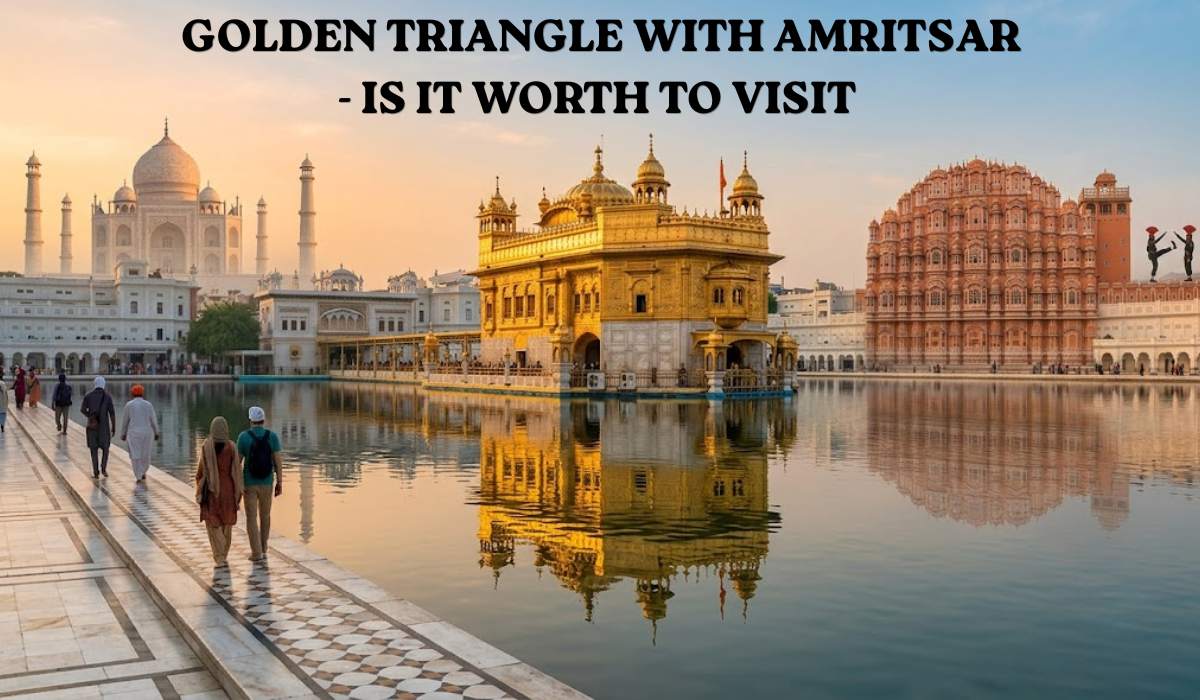
Most travelers visiting India start with the Golden Triangle—Delhi, Agra, and Jaipur. It makes sense. The route is well-trodden, the distances manageable, and the sights exactly what you expect from an India trip.
But what about adding Amritsar?
This guide answers one question: should you add Amritsar to your Golden Triangle itinerary? No booking links. No sales pitch. Just a straight answer based on what travelers actually experience.
Is Golden Triangle with Amritsar Worth It?
Yes—for travelers with at least eight days who want to experience India’s religious and contemporary history alongside its Mughal architecture. The Golden Temple offers a completely different atmosphere than any fort or palace on the standard route. But if you have only five or six days, skip it. The standard triangle is already packed.
What Amritsar Adds to the Golden Triangle
The standard Golden Triangle with Amritsar extension begins with the same Delhi–Agra–Jaipur route before continuing north to Punjab. But what Amritsar offers is fundamentally different from anything on the standard route.
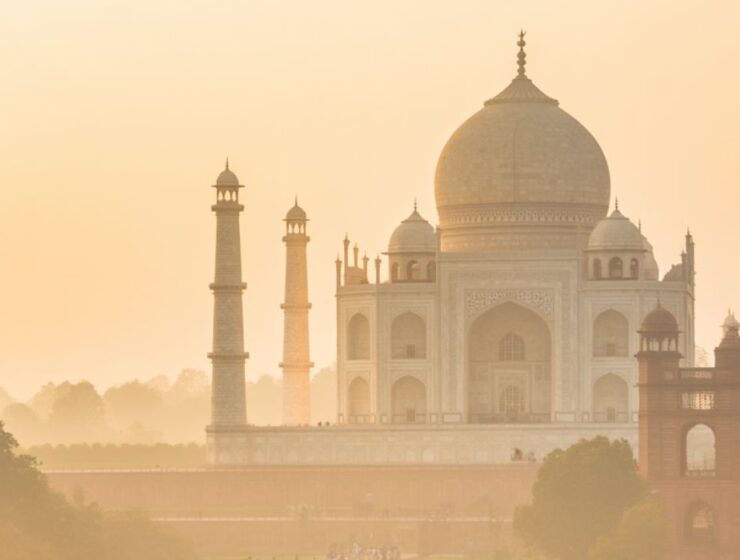
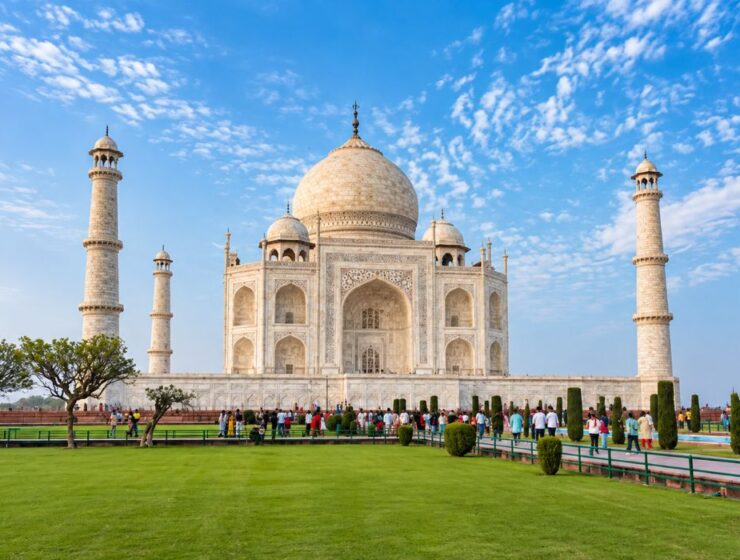
The Golden Triangle covers Mughal history. Delhi’s Red Fort and Jama Masjid, Agra’s Taj Mahal, Jaipur’s Amber Fort—these are monuments built by emperors.
Amritsar is different.
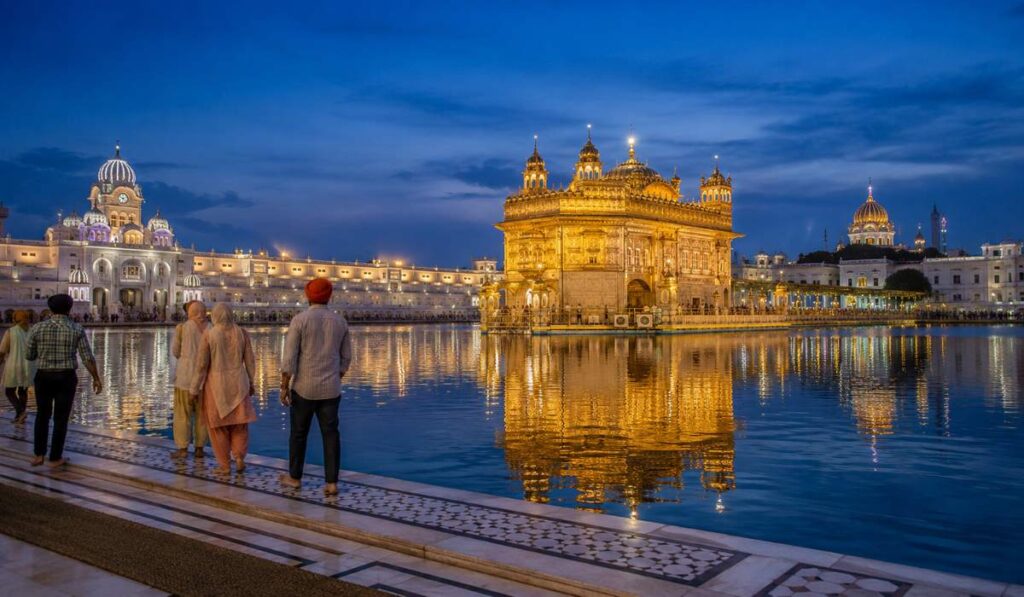
Amritsar is about faith. The Golden Temple (Harmandir Sahib) is the holiest site in Sikhism. It’s not a monument you observe from a distance. You walk in, remove your shoes, cover your head, and sit on the marble floor with thousands of others. The langar—the free community kitchen—serves tens of thousands of people every day, often exceeding 100,000 on busy days and festivals, regardless of religion or background.
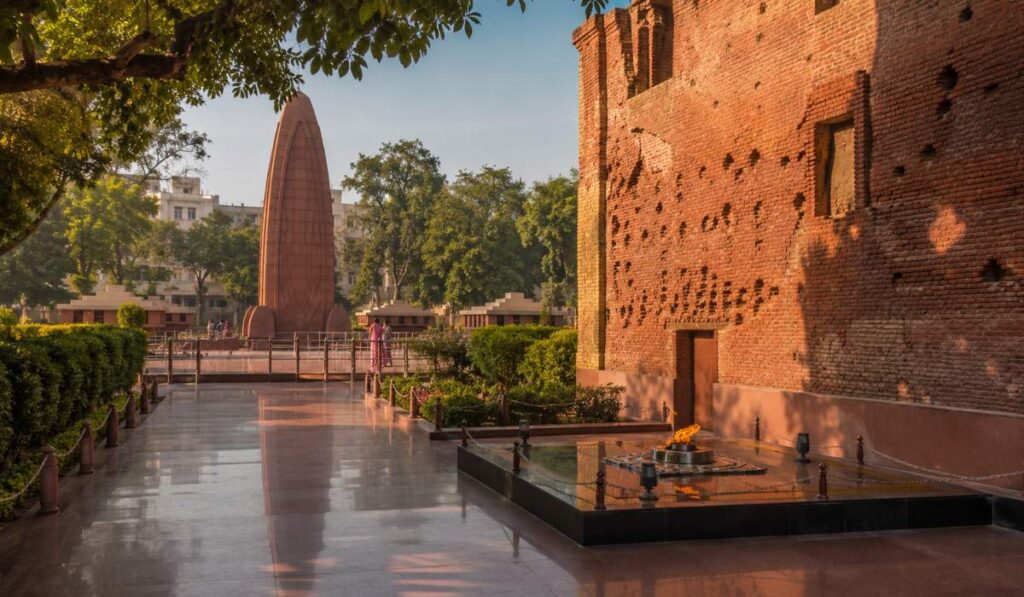
Amritsar also adds a layer of modern history. Jallianwala Bagh, a short walk from the temple, is where British troops fired on unarmed civilians in 1919. It’s a site that shaped India’s independence movement. For travelers interested in 20th-century history, this matters more than another palace.
And then there’s the Wagah Border ceremony. It’s theatrical, loud, and unlike anything else on the Golden Triangle route—a daily parade of nationalism at the India-Pakistan border.
Over the years, our guides Aamir and Azhar have noticed that travelers who add Amritsar to their Golden Triangle tour almost always remember the Golden Temple and Jallianwala Bagh more vividly than another fort or palace—not because they’re larger, but because the experiences are fundamentally different.
Golden Triangle vs. Golden Triangle with Amritsar
| Standard Golden Triangle | Golden Triangle with Amritsar | |
|---|---|---|
| Cities | Delhi, Agra, Jaipur | Delhi, Agra, Jaipur, Amritsar |
| Total Days | 5–6 days | 8–9 days |
| Focus | Mughal architecture, forts, palaces | Mughal history + Sikh faith + modern Indian history |
| Travel Complexity | Simple loop | Requires a long transfer from Jaipur to Delhi (5 hrs) + Delhi to Amritsar (6–8 hrs by train or 1.5 hrs by flight) |
| Best For | First-time visitors, short trips | Travelers with 8+ days, those interested in religion and 20th-century history |
| Pace | Relaxed | Faster, more travel days |
Emperor Holidays — Golden Triangle with Amritsar Tour
Since 2009, we’ve been running private tours across North India. Our guides—including Aamir and Azhar, both locals with years of experience—have taken hundreds of travelers on the Golden Triangle with Amritsar route.
The tour covers all the key sights with private transport and local guides. No group tours. No fixed schedules. You travel at your own pace.
For full details, visit our Golden Triangle with Amritsar Tour page.
Three Essential Places in Amritsar
1. Golden Temple (Harmandir Sahib)
The Golden Temple sits at the center of a sacred pool. The gold-plated shrine is visible from every angle. The atmosphere is quiet, even with thousands of visitors. You’ll hear continuous devotional music (kirtan) echoing across the water.
Practical tips from our guides:
- Opening hours: Open 24 hours. The best time to visit is early morning (before 7 AM) when crowds are thinner and the light is soft. Evening is also beautiful when the temple is lit up.
- Security: Security checks usually take 10–20 minutes. Avoid bringing large bags—there’s a luggage storage area near the main entrance, but it gets full quickly.
- Dress code: Cover your head. Remove shoes before entering the complex. Wash your feet at the designated pools. Don’t point your feet toward the shrine while sitting.
- Which entrance? The main entrance (Darshani Deori) is the busiest. The side entrance near the clock tower is often less crowded.
- Photography: Allowed around the sarovar (holy pool) but restricted inside the main shrine. Ask before photographing people.
- Where do shoes go? Free shoe storage is available at multiple entry points. Keep your token—it’s how you reclaim your shoes.
- Volunteering: Foreign visitors can volunteer in the langar. Just ask at the kitchen area—they’re always happy for help.
- Water: Free drinking water is available throughout the complex.
Langar: The community kitchen serves free vegetarian meals throughout the day. Visitors can eat, serve, or just watch. It’s one of the most genuine experiences in India. Best spot to sit: Near the back of the hall—it’s quieter and you can observe the kitchen operations.
| Quick Facts | |
|---|---|
| Full name | Harmandir Sahib (Darbar Sahib) |
| Religion | Sikhism |
| Entry fee | Free |
| Best time to visit | Early morning or evening |
| Dress code | Head covered, shoes removed |
| Langar | Free vegetarian meals, 24/7 |
2. Jallianwala Bagh
A five-minute walk from the Golden Temple, this public garden is a memorial to the 1919 massacre. British troops under General Dyer fired on a peaceful gathering, killing hundreds.
The site is sobering. You’ll see the bullet marks on the walls and the well where many jumped to escape. The memorial flame burns continuously.
Opening hours: 6:30 AM to 7:30 PM daily. Free entry.
Time needed: 1 to 2 hours.
For many travelers, this visit is more impactful than any fort or palace. It connects you to India’s independence struggle in a way that history books cannot.
3. Wagah Border Ceremony
The daily beating retreat ceremony at the India-Pakistan border is part parade, part performance. Indian and Pakistani soldiers march, kick high, and lower their flags in synchronized hostility. The crowd cheers. It’s loud, energetic, and thoroughly unique.
Practical tips:
- Timing (2026): The ceremony starts at 5:00 PM and concludes by 5:30 PM (revised from February 2026).
- Arrival: Reach by 3:00 PM for security checks and to get a seat. Weekends are much busier—arrive earlier.
- Documents: Foreign visitors must carry their passport (original, not a photo). It’s checked at multiple points.
- Baggage: Avoid bringing large bags or backpacks. Security is strict—only small bags are allowed.
- Distance from Amritsar: 29 km, about 45 minutes by car.
- What to bring: Passport, water, sunglasses (you’ll be facing west), and a hat.
8-Day Overview — Golden Triangle with Amritsar
A typical 8-day itinerary includes Delhi (2 days), Agra (1 day), Jaipur (2 days), and Amritsar (2 days), with one travel day between Jaipur and Amritsar via Delhi.
The route is Delhi → Agra → Jaipur → Delhi (train or flight to Amritsar) → Amritsar → Delhi.
The Jaipur–Delhi–Amritsar leg is the longest travel day. You drive from Jaipur to Delhi (about 5 hours), then take an evening train or flight to Amritsar. The train takes 6 to 8 hours; the flight takes 1.5 hours plus airport time.
Most travelers prefer the train for the experience, but the flight saves time.
Common Mistakes When Adding Amritsar to Your Golden Triangle Trip
Even travelers who decide to add Amritsar often make these errors:
Trying to fit it into a 5-day itinerary. The Golden Triangle alone needs at least 6 days at a comfortable pace. Adding Amritsar without adding days means rushing through everything.
Visiting the Golden Temple only at midday. The crowds peak between 11 AM and 3 PM. Early morning (before 7 AM) or evening (after 7 PM) gives you a completely different experience.
Arriving late for the Wagah Border ceremony. If you arrive after 3:30 PM, you’ll be at the back of the crowd and may not see much. Foreign visitors also need extra time for passport checks.
Skipping the langar experience. Some travelers are nervous about eating in a crowded community kitchen. Don’t be. It’s clean, organized, and one of the most authentic experiences in India.
Underestimating the Jaipur–Delhi–Amritsar travel day. This is the longest travel day of the entire trip. Book evening transport so you arrive in Amritsar late but don’t waste daylight hours.
Not covering your head properly. A scarf or handkerchief works, but it must stay on inside the temple complex. Keep a spare in your bag.
Is It Worth Adding? — An Honest Answer
Add Amritsar to Your Golden Triangle IF:
- You have at least 8 days for your India trip.
- You’re interested in religion, faith, and spirituality—not just architecture.
- You want to understand India’s independence movement on a deeper level.
- You’re okay with one long travel day between Jaipur and Amritsar.
- You want to experience something completely different from the Mughal forts and palaces.
- You’re traveling with children—the Wagah Border ceremony and langar experience are engaging for all ages.
Skip Amritsar and Stick to the Standard Golden Triangle IF:
- You only have 5 or 6 days in India. The standard Golden Triangle is already full.
- You’re primarily interested in Mughal history and architecture.
- You dislike crowds. The Golden Temple gets very busy, especially during festivals.
- You have limited mobility. The temple complex involves walking, stairs, and standing in lines.
- You’re on a tight budget. Adding Amritsar adds travel costs and at least two extra days.
Our honest take: Amritsar is worth it for the right traveler. The Golden Temple is one of the most genuine spiritual experiences in India. Jallianwala Bagh provides historical context that the forts and palaces don’t offer. But if you’re rushing through the Golden Triangle in six days, Amritsar will feel like a detour rather than an enhancement.
Practical Information
Getting to Amritsar from Delhi
- Flight: 1 to 1.5 hours. Add 2–3 hours for airport procedures. Book flights in advance—they fill up quickly during tourist season.
- Train: 6 to 8 hours for express trains. Overnight trains (like the Shatabdi Express) save a hotel night and are comfortable in AC classes.
- Bus: 8 to 10 hours. Not recommended for long-distance comfort.
- Car: 8 to 10 hours. Only if you want to stop along the way.
Most travelers take the train or flight. The train offers a genuine Indian experience; the flight saves time.
Weather in Amritsar
| Season | Months | Temperature | Notes |
|---|---|---|---|
| Winter | Nov–Feb | 5°C to 20°C | Best time. Clear skies, comfortable days, cold nights. |
| Summer | Mar–Jun | 25°C to 45°C | Very hot. The marble at the Golden Temple gets extremely warm. |
| Monsoon | Jul–Sep | 25°C to 35°C | Humid with occasional rain. The temple complex gets crowded during festivals. |
Best months to visit: October to March. The Wagah Border ceremony is most enjoyable in winter.
Where to Stay in Amritsar
For first-time visitors, stay near the Golden Temple complex. Hotels within walking distance make it easy to visit multiple times (morning and evening). The area around Hall Bazaar and Queens Road offers good mid-range options.
Getting Around Amritsar
- Uber and Ola operate in Amritsar. They’re reliable and cheaper than local taxis.
- Auto-rickshaws are everywhere. Negotiate fares before starting.
- Walking between the Golden Temple, Jallianwala Bagh, and the local markets is easy—they’re all within 15 minutes of each other.
Language
Punjabi is the local language. Hindi and English are widely understood, especially in tourist areas.
Cash and ATMs
ATMs are available near the Golden Temple and in the city center. Carry cash for local shops, auto-rickshaws, and smaller restaurants. Card payments are accepted at hotels and larger restaurants.
Mobile Signal
4G coverage is good in Amritsar. A local SIM card with data is useful for maps and Ubers.
Food in Amritsar
Punjabi food is rich, buttery, and delicious. Must-tries include Amritsari kulcha (stuffed bread), butter chicken, and lassi (yogurt drink). The langar at the Golden Temple serves simple vegetarian meals—eat there at least once.
Recommended restaurants near the Golden Temple: Kesar Da Dhaba (vegetarian, famous for dal), Bharawan Da Dhaba (traditional Punjabi), and Kanha Sweets (snacks and sweets).
Shopping
Amritsar is known for Phulkari embroidery (colorful floral patterns), Patiala salwar (traditional Punjabi clothing), and brassware. The markets near the Golden Temple are good for souvenirs. Hall Bazaar is the main shopping area.
Dress Code
For the Golden Temple: cover your head, remove shoes, and wear modest clothing (shoulders and knees covered). For other sites, standard tourist attire is fine.
Frequently Asked Questions
How many days do I need for Golden Triangle with Amritsar?
You need at least 8 days. A standard itinerary is 2 days in Delhi, 1 in Agra, 2 in Jaipur, and 2 in Amritsar, with 1 travel day between Jaipur and Amritsar. If you have fewer than 8 days, stick to the standard Golden Triangle. Trying to add Amritsar to a 6-day trip means rushing through everything.
Should I fly or take the train from Delhi to Amritsar?
It depends on your priorities. The flight takes 1.5 hours and saves time, but you lose the experience of an Indian train journey. The overnight train (like the Shatabdi Express) is comfortable in AC class, saves a hotel night, and gives you a genuine local experience. Most travelers with limited time choose the flight; those who want the full Indian experience take the train.
What is the best time to visit the Golden Temple?
Early morning (before 7 AM) or evening (after 6 PM). Early morning is quieter and the light is beautiful. Evening is dramatic with the temple lit up. Midday is the busiest. During Sikh festivals like Baisakhi (April 14), the temple is extremely crowded—plan accordingly.
How long does the Wagah Border ceremony last?
The ceremony starts at 5:00 PM and lasts about 30 minutes, concluding by 5:30 PM (2026 timing). Arrive by 3:00 PM for security checks and to get a good seat. The entire experience—including travel from Amritsar—takes about 4 hours. Weekends are busier, so arrive earlier.
Is Amritsar worth visiting after Jaipur?
If you have the time, yes. The contrast between Rajasthan’s forts and Punjab’s spiritual heritage is significant. However, the transfer from Jaipur to Amritsar is long (5 hours to Delhi plus 6 hours by train or 1.5 hours by flight). Many travelers find this journey worth it for the Golden Temple and Jallianwala Bagh experiences.
What should I wear to the Golden Temple?
Cover your head with a scarf or cloth (available at the entrance). Remove your shoes before entering the complex. Wear modest clothing—shoulders and knees covered. Both men and women follow the same rules. Wash your feet at the designated pools before entering the main shrine. Avoid tight or revealing clothing.
Is it safe to travel to Amritsar?
Yes. Amritsar is a major tourist city and generally safe for travelers. The Golden Temple area is well-policed. Standard precautions apply: keep valuables secure, avoid isolated areas at night, and use registered taxis or app-based cabs. The Wagah Border requires passport checks, which are routine. Foreign visitors are treated with respect.
Can I volunteer at the langar as a foreigner?
Yes. The Golden Temple’s langar accepts volunteers from all backgrounds and nationalities. Just walk into the kitchen area (follow the signs or ask someone) and let them know you’d like to help. Activities include rolling chapatis, washing dishes, or serving food. No prior experience needed. It’s a memorable experience.
How strict is the dress code for men vs. women?
The dress code applies equally to men and women. Both must cover their heads and remove shoes. Men should wear long pants (not shorts). Women should cover their shoulders and wear long pants or skirts. If you forget a head covering, free scarves are available at the entrance. Don’t wear leather items (belts, shoes) inside.
What is the best way to get a reflection photo of the Golden Temple?
The best spot for reflection photos is on the south side of the sarovar (holy pool), near the main entrance, during sunrise (around 6 AM to 7 AM). The light is golden, the water is calm, and crowds are minimal. Avoid using flash—it disturbs the atmosphere.
Final Verdict
The Golden Triangle with Amritsar is not for everyone. It requires more time, more travel, and a specific interest in what Amritsar offers—faith, contemporary history, and a different side of India.
If that sounds like you, it’s worth it. The Golden Temple alone justifies the detour.
If you’re short on time or focused on Mughal architecture, the standard Golden Triangle is the better choice. Read our comparison of Golden Triangle 5 vs 6 Days to decide which fits your schedule.
If you’ve decided that Amritsar fits your travel style, our private Golden Triangle with Amritsar Tour combines Delhi, Agra, Jaipur, and Amritsar in one itinerary. For travelers with less time, the standard Golden Triangle Tour remains an excellent option.
Planning Your Trip?
These guides will help you prepare:
- Golden Triangle Complete Guide — Everything you need to know before booking.
- Golden Triangle 5 vs 6 Days — Which One is Right for You? — Compare itineraries and travel styles.
- Best Time for Golden Triangle Tour — Weather, crowds, and when to visit each city.
- Golden Triangle Tour Budget Guide 2026 — Understand realistic costs before booking.
- Fatehpur Sikri Day Trip from Agra — Should you add this stop to your Agra visit?
- Agra Fort Complete Visitor Guide — Practical tips for visiting Agra’s second-most-important monument.
Conclusion
Amritsar adds something the Golden Triangle lacks: a living spiritual experience and a connection to India’s independence. It’s not a replacement for the standard route—it’s an addition for travelers with the time and interest.
Ask yourself: do you want another fort, or do you want to sit by the sacred pool at the Golden Temple? Your answer tells you everything you need to know.