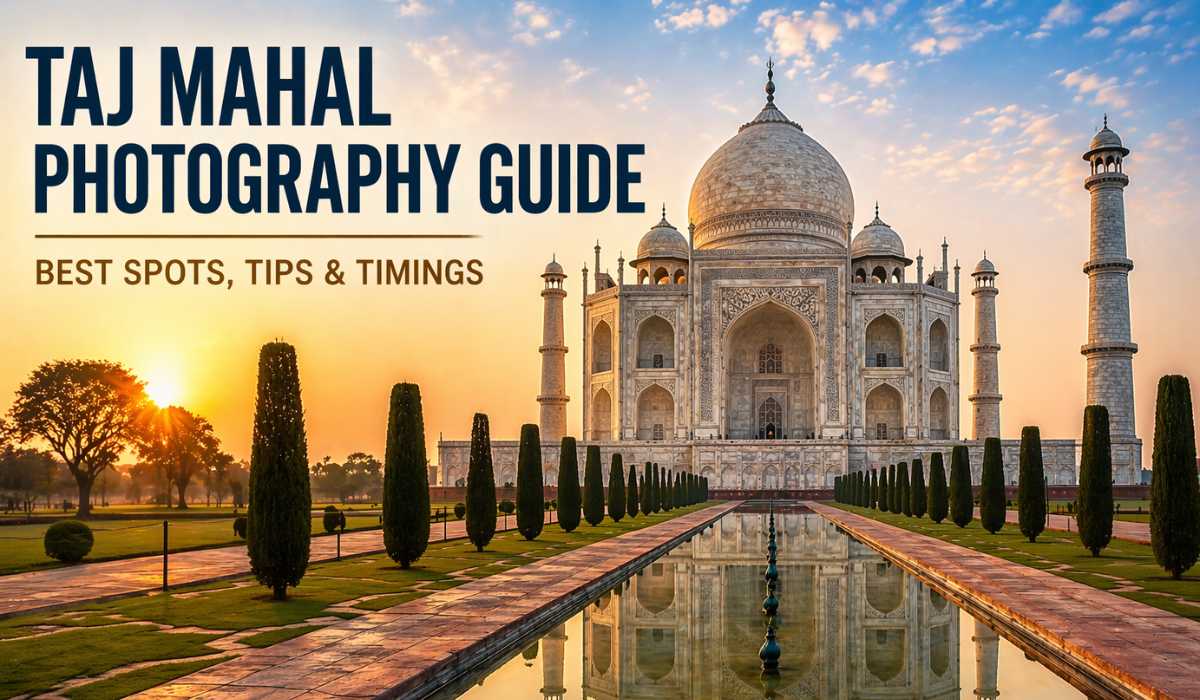
Every tourist photographs the Taj Mahal. 90% get the same shot.
If your photo looks average, it’s not your camera — it’s your timing.
This Taj Mahal photography guide is for the other 10% — people who want something different, something real, something worth keeping. Written from a local guide’s perspective at Emperor Holidays. After guiding more than 3,000 tours at the Taj Mahal, these are the shots that matter. According to this Taj Mahal photography guide, you don’t need expensive gear — you need the right spot and the right minute to press the shutter.
On peak days, the Taj Mahal sees 40,000–50,000 visitors. That’s why even a one-hour delay changes your photo completely.
Quick Reference — Best Photo Spots at a Glance
| Spot | Best Time | Crowd |
|---|---|---|
| Main Gate Arch | 6-8 AM | Medium |
| Reflecting Pool | 6-8 AM | High |
| Lady Diana Bench | 7-9 AM | High |
| Side Angle | Anytime | Low |
| Mehtab Bagh | Sunset | Low |
| Agra Fort Balcony | Anytime | Low |
| River Bank | Sunrise | Zero |
Which Entry Gate for Photographers?
| Gate | Best For | Wait Time |
|---|---|---|
| East Gate | Closest to reflecting pool, less crowded | 10-15 min |
| South Gate | Direct access, but longer queues | 20-30 min |
| West Gate | Used for Friday prayers only | Not recommended |
Quick takeaway: Use East Gate. You’ll save 15 minutes and exit right at the pool.
Best Time for Photography
Best Time to Photograph Taj Mahal
Best time: Sunrise (6–8 AM)
Best spot inside: Reflecting pool
Best external view: Mehtab Bagh at sunset
Avoid: Midday (10 AM – 2 PM)
Sunrise — Best Overall
Why: Soft golden light, fewer people, cool weather. First entry slot is the only time you’ll get the reflection pool without ripples from wind. Crowd level is about 30% of peak day.
Quick takeaway: Arrive 45 minutes before sunrise. Those first 20 minutes inside are worth more than any camera lens.
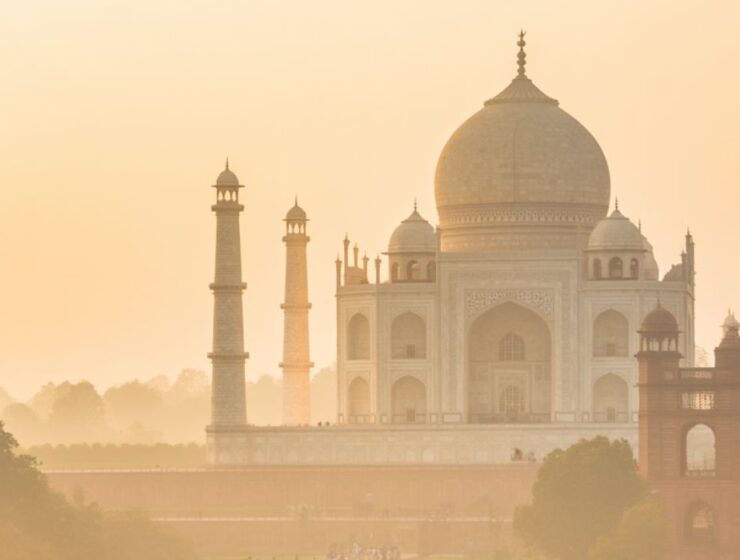
Visual trigger: The marble turns from pale gray to warm peach. Position yourself at the reflecting pool facing east. The sun rises behind the left minaret. Use a low angle to capture the water mirror.
Sunset
Warm orange glow on marble works beautifully. Best time is 3-5 PM. Honest truth from this Taj Mahal photography guide: the Taj Mahal closes before actual sunset in summer. Plan accordingly. Mehtab Bagh is your backup for true sunset shots.
Quick takeaway: Inside Taj = last light at 4:30 PM in winter, 5:30 PM in summer. Verify before you go.
Midday — Avoid
Harsh white light flattens the marble. Maximum crowd. Heat haze ruins distant shots. Skip it or use the time for Agra Fort instead.
Full Moon Night
Limited tickets — only 5 nights per month. The white marble looks ethereal under moonlight. Exterior only — no entry inside. Book months in advance.
Transition hook: Now that you know exactly when to shoot, let’s talk about where to stand — because most tourists pick the wrong spots.
Best Photo Spots — Inside Taj Mahal
Spot 1 — Main Gateway Arch
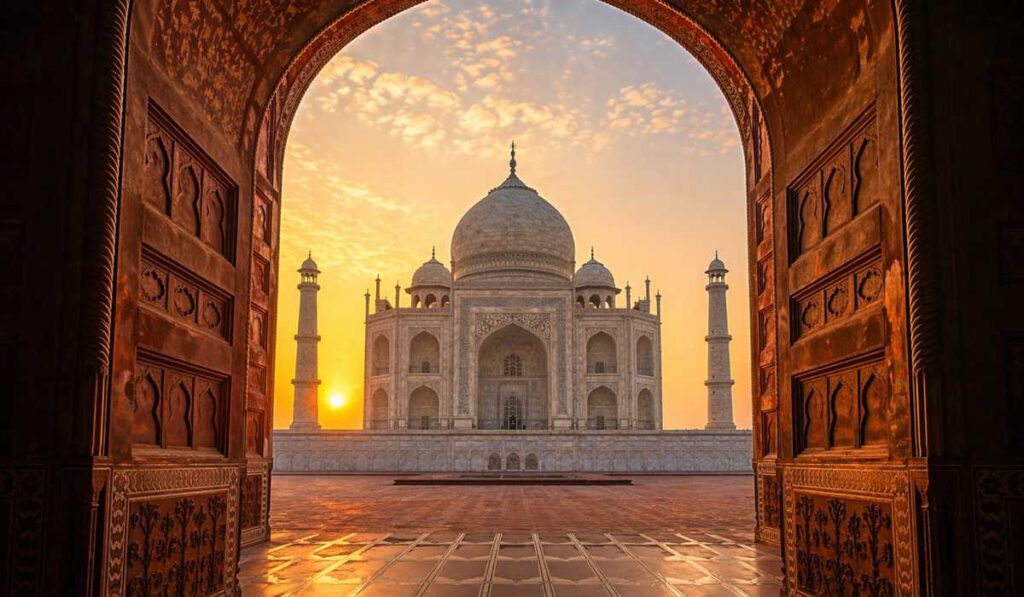
The classic framed shot. Arrive early — this arch gets crowded by 8 AM. Best angle: stand dead center, shoot through the arch toward the tomb.
Visual trigger: The arch creates a natural frame. Ensure the top of the tomb dome is exactly centered inside the arch opening. Expose for the bright marble outside, not the dark arch interior.
Spot 2 — Reflecting Pool
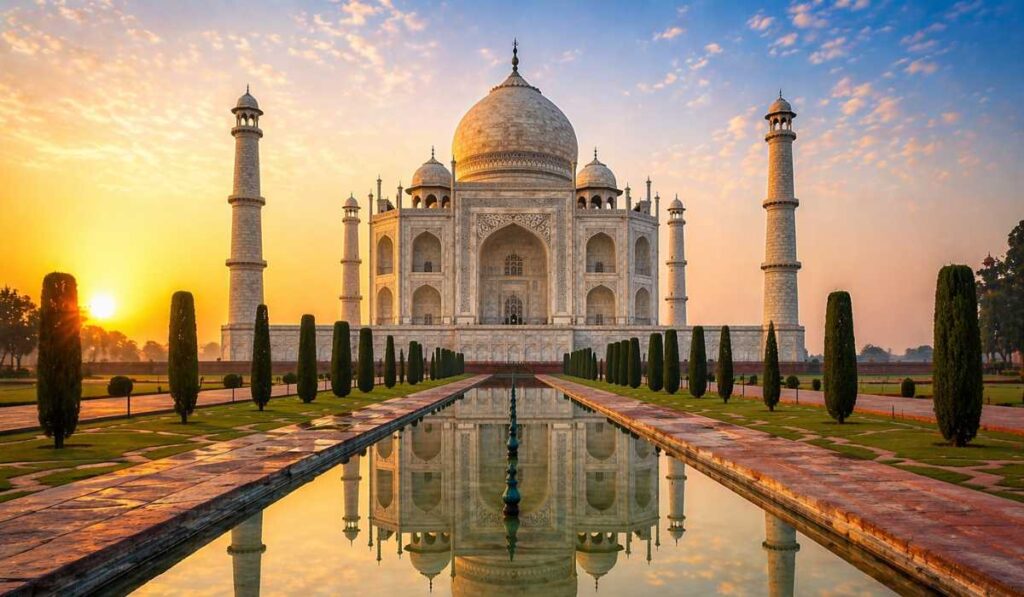
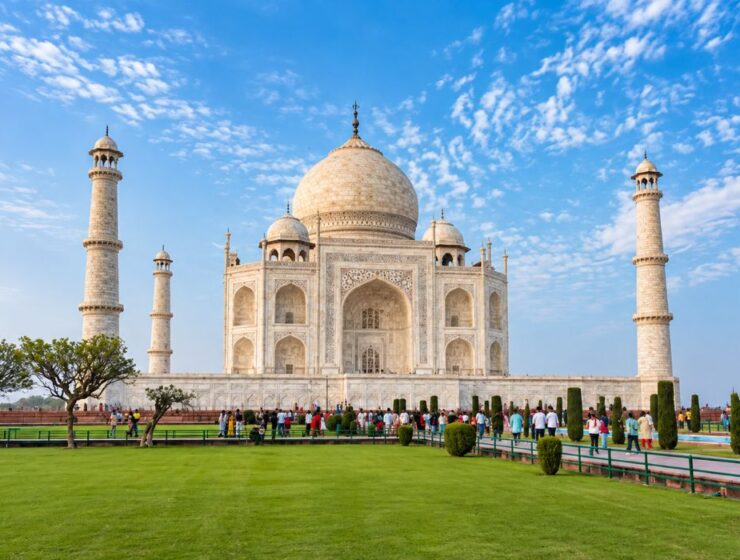
Long pool in the center garden. The reflection shot works only before 8-9 AM. After that, wind breaks the reflection. Pro tip from this Taj Mahal photography guide: kneel down. Low angle gives you a much better reflection — the water line aligns with the marble base.
Quick takeaway: Before 8 AM = perfect mirror. After 8 AM = ripples. After 9 AM = forget it.
Visual trigger: Wait for absolutely still air. The reflection should be a perfect mirror — no ripples. Frame symmetrically with the tomb centered between the water and the sky.
Spot 3 — Lady Diana Bench
The most famous bench on the right side of the garden. Everyone knows it — but it’s still worth it. Best time is 7-8 AM before the line gets long.
Visual trigger: Shoot from behind the bench, framing the person sitting with the Taj Mahal behind them. The bench is low — have your subject lean slightly forward for better proportion.
Spot 4 — Side Angles
Left and right sides of the main platform. Less photographed. More architectural detail visible. Almost no crowd. This is where guides take their own family photos.
Visual trigger: From the right side, you can capture the red sandstone mosque and the white marble tomb together. Use a 50-70mm lens to compress the two elements.
Spot 5 — Close Up Details
The pietra dura inlay work. Calligraphy on the arches. Marble textures. Most tourists walk right past these. A 50mm or zoom lens makes all the difference here.
Visual trigger: The flower inlays get direct morning light on the southern side. Get within 2 feet. Focus on a single flower — the semi-precious stones catch light differently than marble.
Best Photo Spots — Outside Taj Mahal
Mehtab Bagh
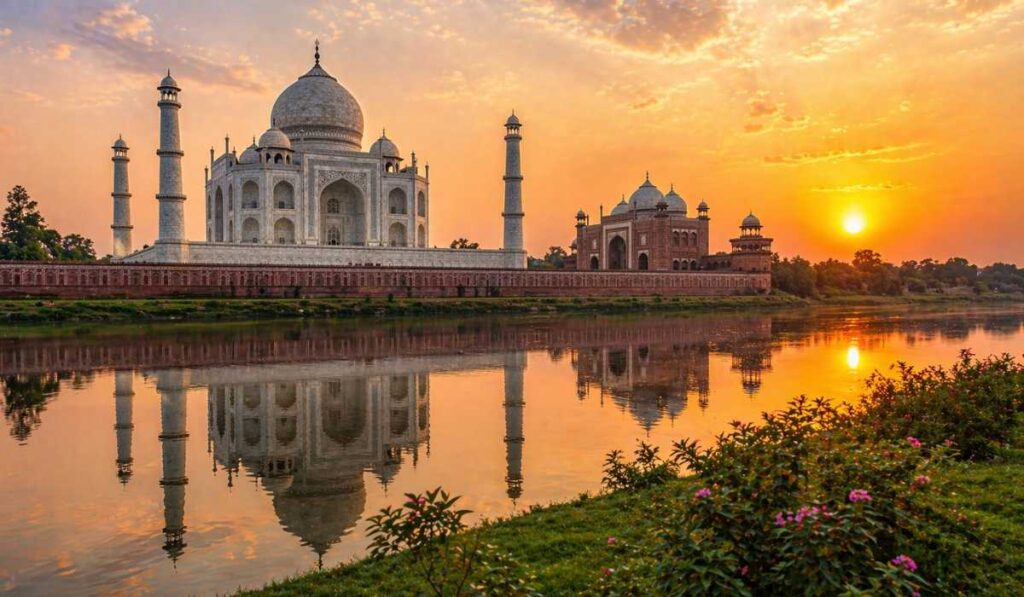
The best overall external view. You get the full monument plus river reflection. Tripods are allowed here. Sunset is magic hour. It’s 3 km from the Taj Mahal. If you skip this, you are missing the best shot in Agra. Any serious Taj Mahal photography guide will tell you: Mehtab Bagh is non-negotiable.
Quick takeaway: Mehtab Bagh > any inside shot for uniqueness. Go at sunset, bring a tripod.
Visual trigger: Position yourself at the far left corner of the garden. The Yamuna River flows diagonally toward the Taj. Use a tripod and a 24mm lens. Shoot 15 minutes before actual sunset for warm gold light. After sunset, stay for blue hour — the monument turns deep indigo.
For exact seasonal timing and access points, read our complete Mehtab Bagh viewpoint guide.
Agra Fort Balcony
Shah Jahan’s actual view — the Taj Mahal from a distance, where he spent his last years looking at it. Historical context adds real emotion to the photo. No tripod restrictions. Located 4 km from the Taj Mahal.
Visual trigger: Frame the Taj through the octagonal balcony’s arches. Include the dark interior walls on the sides — the contrast between dark stone and distant white marble tells the story.
Lighting changes across seasons — that’s why understanding the best time to visit Taj Mahal is critical before planning your shoot. The same knowledge applies to Agra Fort shots, where the afternoon sun hits the Taj directly.
River Bank (Near Mehtab Bagh)
The most unique angle — almost no tourists come here. Yamuna River in the foreground, Taj Mahal in the background. Sunrise gives you misty, ethereal conditions. Ask a local guide to show you the exact access point.
Visual trigger: Use a telephoto lens (100-200mm) to compress the river and monument. Morning mist creates natural diffusion. Expose for the highlights on the Taj — let the foreground go dark for silhouette effect.
Best Photo Spot Comparison (Quick Decision)
| You want… | Go here |
|---|---|
| Perfect symmetry | Reflecting pool (inside, before 8 AM) |
| Zero crowd, unique angle | River bank (sunrise) |
| Most famous Instagram shot | Lady Diana Bench (7-8 AM) |
| Best external view + tripod allowed | Mehtab Bagh (sunset) |
| Historical storytelling | Agra Fort Balcony (anytime) |
| Classic framed shot | Main Gateway Arch (early morning) |
Transition hook: Now that you know where and when, let’s fix what most people do wrong — because mistakes ruin more photos than bad cameras.
Common Photography Mistakes at Taj Mahal (Avoid These)
Most visitors ruin their own shots. Here’s what not to do:
- Coming after 8 AM — You lose the reflection, gain crowds, and get harsh light. The difference between 7 AM and 9 AM is the difference between a portfolio shot and a snapshot.
- Shooting only the center frame — The Taj is symmetrical, but the best shots are often off-center. Side angles, details, and environmental context tell a better story.
- Ignoring the river side — 95% of tourists never see the Taj from the Yamuna bank. That’s where the unique shots live.
- Not cleaning your lens — Marble dust is everywhere. Wipe your lens every 20 minutes. Seriously.
- Using flash inside — Flash destroys the mood and is not allowed. Use high ISO or a fast prime lens instead.
Quick takeaway: Avoid these five mistakes and you’re already ahead of 90% of photographers at the Taj.
Is a Taj Mahal Photography Tour Worth It?
If you come solo: You’ll spend your first hour figuring out which gate, which spot, which timing. That hour is your best light — gone.
If you come late: You lose the reflection, you fight crowds, you leave with average shots.
If you don’t know the angles: You’ll stand where everyone else stands. Your photos will look like everyone else’s.
A photography-focused tour fixes all three. Our guides put you at the reflecting pool at 6:15 AM — exactly when it works. Then Mehtab Bagh at sunset — exactly when the light hits. No guesswork. No wasted time.
Transition hook: Mistakes avoided. Now let’s dial in your settings — beginner to advanced.
Camera Settings — Quick Guide
Sunrise / Sunset
- Aperture: f/8 to f/11
- ISO: 100-400
- Shutter: adjust for exposure
- White balance: Cloudy or Shade
Midday (If You Must)
- Aperture: f/11 to f/16
- ISO: 100
- ND filter recommended
Reflection Shots
- Tripod is mandatory
- Long exposure: 1/2 to 2 seconds
- Remote shutter release
- Mirror lockup if your camera has it
Mobile Photography Tips
- HDR mode ON
- Shoot in RAW if your phone allows it
- Portrait mode for detail shots
- Use burst mode to grab crowd-free moments between people walking by
What to Pack for Taj Mahal Photography
- Lens wipes (marble dust is real)
- Extra camera battery (cold morning + continuous shooting drains fast)
- ND filter (for midday or long exposure water shots)
- Power bank (phone GPS + camera transfer kills battery)
- Small dust blower (sensor dust from construction areas)
- Lightweight monopod (tripods not allowed inside, but monopods are fine)
Advanced Tips for Better Taj Mahal Photos
Lens Selection for Different Shots
- 24mm (wide angle) — Full monument symmetry, arch frames, Mehtab Bagh landscapes
- 50mm (standard) — Detail shots, pietra dura, human scale with architecture
- 70-200mm (telephoto) — Compression shots from Agra Fort, river bank, crowd isolation
Crowd Removal Trick
You can’t control 40,000+ daily visitors. But you can outsmart them:
- Burst mode — Shoot 10-15 frames quickly. In one of them, the gap between people will be clean.
- Multiple exposures — Take 5-10 shots from the same tripod position. Later, use Photoshop’s “median” stack mode to remove moving people.
- Wait for the guide wave — Guides often pause for 10 seconds to let tourists shoot. Watch for that rhythm.
Most Taj Mahal photos online are taken at the wrong time.
That’s a fact. The iconic shots you see on Instagram are mostly shot between 6-8 AM or at Mehtab Bagh at sunset. Anything else is compromise. This Taj Mahal photography guide is about getting the real thing — not the second-best version.
What’s Allowed & Not Allowed
| Item | Inside Taj | Mehtab Bagh |
|---|---|---|
| Camera | ✅ | ✅ |
| Tripod | ❌ | ✅ |
| Video | ✅ Limited | ✅ |
| Drone | ❌ | ❌ |
| Flash | ❌ Inside | ✅ |
| Selfie Stick | ✅ | ✅ |
Important: Drones are NOT allowed anywhere in Agra. Not at the Taj, not at Mehtab Bagh, not at the river bank. Security is strict. Don’t try.
After Your Shoot (Optional)
You finish shooting by 9 AM. A few practical notes:
- Edit-friendly cafes near East Gate: Coffee Day, Starbucks (both have Wi-Fi)
- Local breakfast: Bhatia Bakery (old-school chai and puffs) or Joney’s Place
- Other photo-worthy sites nearby: Itmad-ud-Daulah (Baby Taj) — 15 min drive, great for detail shots
Guide Aamir’s Top 3 Tips
Aamir has been guiding at the Taj Mahal for 14 years, with over 3,000+ tours completed. Based on daily on-ground experience, these are his exact words:
Tip 1:
“Sabse pehle reflecting pool ke paas jao — 6:30 AM tak yahan crowd nahi hota. 8 AM ke baad same shot impossible hai.”
(Translation: Go to the reflecting pool first. No crowd until 6:30 AM. After 8 AM, the same shot is impossible.)
Tip 2:
“Lady Diana bench — line mein wait karo. Worth it. But go early.”
Tip 3:
“Mehtab Bagh sunset shot — yeh shot mere paas hai jo kisi ki Instagram par nahi hoga. Woh side se reflection — unique hai.”
(Translation: This shot I have — no one else will have on their Instagram. That side reflection is unique.)
Book a Photography-Focused Tour
Without a guide, you’ll waste your first hour figuring out angles. That hour is your best light. Our guides know exactly when and where to go — no wasted time, no wrong turns.
→ Sunrise Tour — You’ll be at the gate before anyone else. First 20 minutes of empty Taj Mahal. Guaranteed reflection shot.
→ Same Day Tour — Practical option from Delhi by car. Includes all photo spots in one day.
→ See all Taj Mahal tours and compare options.
For current entry fees and online booking, check our detailed Taj Mahal ticket price guide.
Related Guides
- Mehtab Bagh Guide — Full external viewpoint details
- Best Time to Visit Taj Mahal — Seasonal light and crowd patterns
- Taj Mahal Ticket Price — Up-to-date fees and booking
- Sunrise Tour Worth It? — Honest ROI analysis
- Agra Fort Guide — Complete visitor and photo tips
FAQ —
Q1: Can I use a tripod inside the Taj Mahal?
No. Tripods are not allowed inside the main complex. Security will stop you. Use a monopod or steady your camera on a railing. Tripods ARE allowed at Mehtab Bagh.
Q2: What’s the best lens for Taj Mahal photography?
A 24-70mm f/4 or f/2.8 covers 90% of shots. Add a 70-200mm for compression shots from Mehtab Bagh or Agra Fort. For mobile users, the 2x or 3x zoom lens on recent phones works well.
Q3: Is drone photography allowed?
No. Absolutely not. Drones are banned everywhere in Agra. Your drone will be confiscated, and you may face legal trouble.
Q4: What’s the best spot for a reflection photo?
The main reflecting pool inside the Taj — but only before 8 AM when the water is still. For a river reflection, Mehtab Bagh at sunset is better.
Q5: How early should I arrive for photography?
Be at the ticket counter 45 minutes before sunrise. Then be first in line at the gate. That gives you 15-20 minutes of nearly empty Taj Mahal before the crowds arrive. Those 20 minutes are worth more than any camera gear.
Final word from Emperor Holidays: This guide is based on 16 years of daily on-ground experience. Miss sunrise once, and you’ll understand why most Taj Mahal photos look average. Don’t be most photographers.