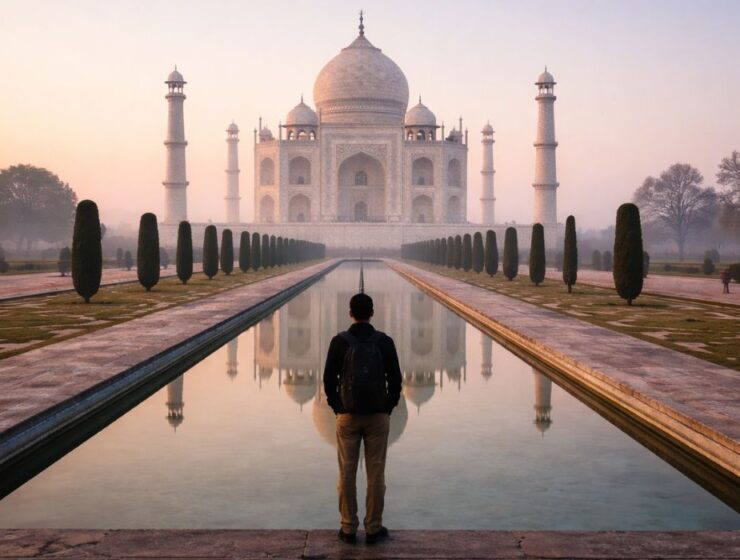

Most people think visiting the Taj Mahal is simple — reach Agra, buy a ticket, walk in.
In reality, timing mistakes ruin more Taj Mahal visits than ticket price confusion.
Visitors arrive too late.
They underestimate crowds.
They miss mausoleum access.
Or they reach at the worst possible time for heat and visibility.
This guide explains Taj Mahal timings in 2025 in detail — not just opening and closing hours, but how timing affects your entire experience, including crowd levels, entry restrictions, photography conditions, and comfort.
Taj Mahal Opening and Closing Time
The Taj Mahal does not follow fixed clock timings like a museum.
Its schedule is based on sunrise and sunset, which changes throughout the year.
Official Daily Timings
- Opening time: 30 minutes before sunrise
- Closing time: 30 minutes before sunset
- Closed on: Every Friday
These timings are regulated by the Archaeological Survey of India and apply to all visitors — Indian and foreign.
What this means in practice
- In summer, the Taj Mahal opens earlier
- In winter, opening time shifts later
- Closing time also varies seasonally
This is why relying on “fixed hours” found on random blogs leads to mistakes.
Last Entry Time: The Rule Most Visitors Miss
Many people assume they can enter right up to sunset. That’s wrong.
- Last entry is usually allowed around 30 minutes before sunset
- Entry gates may close earlier if crowd limits are reached
- Mausoleum entry is often restricted for late arrivals
What happens if you arrive late?
- You may be allowed into the complex
- But denied mausoleum access
- Or rushed through security with limited viewing time
Late entry = compromised experience.
Best Time to Visit the Taj Mahal (Honest Breakdown)

Early Morning (Sunrise to 9 AM) — Best Option
- Lowest crowd density
- Cool temperatures
- Soft natural light on white marble
- Best photography conditions
- Full mausoleum access more likely
This is the best time for first-time visitors.
Midday (10 AM to 3 PM) — Least Recommended
- Maximum crowd pressure
- Harsh sunlight
- Summer heat becomes uncomfortable
- Long security and entry queues
Midday visits are tolerable only in winter and on weekdays.
Late Afternoon (After 3 PM) — Risky Choice
- Risk of missing last entry
- Limited mausoleum access
- Time pressure before closing
Late visits often feel rushed and incomplete.
Best Days to Visit the Taj Mahal
Weekdays vs Weekends
- Best days: Monday to Thursday
- Most crowded: Saturday and Sunday
- Closed: Friday (no exceptions)
Public Holidays
Avoid national holidays and long weekends if possible.
Crowd control restrictions are tighter on these days.
Seasonal Timing Guide (What Most Blogs Ignore)
Summer (April to June)
- Sunrise visits are essential
- Afternoon heat can be extreme
- Midday visits should be avoided
Monsoon (July to September)
- Fewer crowds
- High humidity
- Occasional rain may affect visibility
Winter (October to March)
- Best overall season
- Pleasant daytime weather
- Morning fog possible in December–January
Winter mornings may start foggy, but visibility improves as the sun rises.
Does Mausoleum Entry Have Separate Timings?
There is no separate time window officially listed for mausoleum entry, but:
- Access is time-controlled
- Crowd limits apply
- Late entrants are often denied entry
Practical advice
If mausoleum access matters to you:
- Enter as early as possible
- Avoid late afternoon visits
- Avoid peak crowd days
Entry Gates and Timing Strategy
The Taj Mahal has three main gates, and timing affects which one you should use.
East Gate
- Least crowded in early morning
- Close to parking and drop-off points
- Preferred for visitors with online tickets
West Gate
- More crowded, especially with domestic visitors
- Longer queues during peak hours
South Gate
- Mostly used as an exit
- Limited entry access
Early morning + East Gate = smoothest entry experience.
Common Timing Mistakes Visitors Make
These mistakes repeat daily:
- Assuming fixed opening hours
- Reaching close to sunset
- Planning a visit on Friday
- Ignoring seasonal sunrise changes
- Not accounting for security and queue time
Any one of these can shorten your visit significantly.
How Timing Connects with Ticket Booking
Timing and ticket booking are directly linked.
- Early morning slots fill faster
- Late slots carry higher risk
- Peak days require advance planning
Before finalizing your visit time, always confirm:
- Ticket availability
- Entry slot
- Mausoleum access options
For accurate and updated ticket details, refer to this guide:
👉 Taj Mahal Ticket Price & Online Booking Guide
Final Planning Advice (Read This Once)
A good Taj Mahal visit is not about rushing inside.
It’s about entering at the right time, with realistic expectations.
If you:
- Arrive early
- Choose the right day
- Understand last-entry rules
You avoid queues, confusion, and disappointment.
People Also Ask Questions
1. What time does the Taj Mahal open?
The Taj Mahal opens 30 minutes before sunrise. The exact opening time changes daily depending on the season.
2. What is the last entry time for the Taj Mahal?
Last entry is usually allowed 30 minutes before sunset, but entry gates may close earlier if crowd limits are reached.
3. Is the Taj Mahal open every day?
No. The Taj Mahal is closed every Friday. It remains open on all other days, including public holidays.
4. What is the best time of day to visit the Taj Mahal?
Early morning, around sunrise, is the best time due to fewer crowds, cooler temperatures, and better lighting.
5. Which day is least crowded at the Taj Mahal?
Weekdays (Monday to Thursday) are the least crowded. Weekends and holidays see heavy footfall.
6. Is sunrise better than afternoon visit at the Taj Mahal?
Yes. Sunrise visits offer lower crowd density, softer light, and a more relaxed experience than afternoon visits.
7. How long does a Taj Mahal visit usually take?
A typical visit takes 2 to 3 hours, depending on crowd levels and whether you enter the mausoleum.
8. Can I visit the Taj Mahal at night?
Yes. Night viewing is allowed on full moon nights and two days before and after, with separate tickets and limited slots.