If you’re looking at a same-day Taj Mahal tour from Delhi, you’ve likely noticed a consistent price range across reputable operators. This article will explain that number in complete detail, so you understand exactly what you’re paying for, why the cost is structured as it is, and how to assess its value for your trip. Our goal is to provide clarity, not a sales pitch.
Above all else, let’s establish clear price transparency.
For a standard private same-day Taj Mahal tour from Delhi, operated by a professional company, the realistic price range is USD $140 to $160 per person (based on a group of two). This estimate is for tours departing from central Delhi/NCR hotels and covers the core, non-negotiable components required to execute this complex day trip reliably. Prices are similar across established operators because the underlying costs are largely fixed. A price significantly lower than this range should prompt careful scrutiny, while a price significantly higher typically involves luxury vehicles or premium add-ons not covered here.
Quick Price Snapshot
For a standard private tour for two people from Delhi, here are the three primary options and their typical price points.
| Tour Option | Typical Price (Per Person, Based on Two Travelers) | Key Differentiator |
|---|---|---|
| Same Day Taj Mahal Tour by Car | ~ $145 | Standard full-day private tour by road. |
| Sunrise Taj Mahal Tour by Car | ~ $145 | Earlier departure to arrive for sunrise viewing. |
| Same Day Taj Mahal Tour by Superfast Train | ~ $205 | Replaces car travel with train segments for speed/comfort. |
Note: Prices are illustrative and can fluctuate slightly based on exact travel date, specific pickup location, and currency exchange rates. However, they serve as a reliable benchmark.
Why a Same-Day Taj Mahal Tour Costs This Much
The price isn’t arbitrary; it’s a direct function of the logistical and operational reality of visiting a world heritage site 240 km away and returning in a single day from a megacity like Delhi. It is an engineered solution to a specific problem: time-efficient, risk-managed access.
1. Full-Day, High-Distance Logistics: This is not a 4-hour city sightseeing tour. You are booking a 10 to 12-hour operational window that involves a ~450 km round-trip journey on India’s busiest national highway (NH-44). The vehicle and driver are committed to you for the entire period, regardless of traffic conditions, which are unpredictable and often severe.
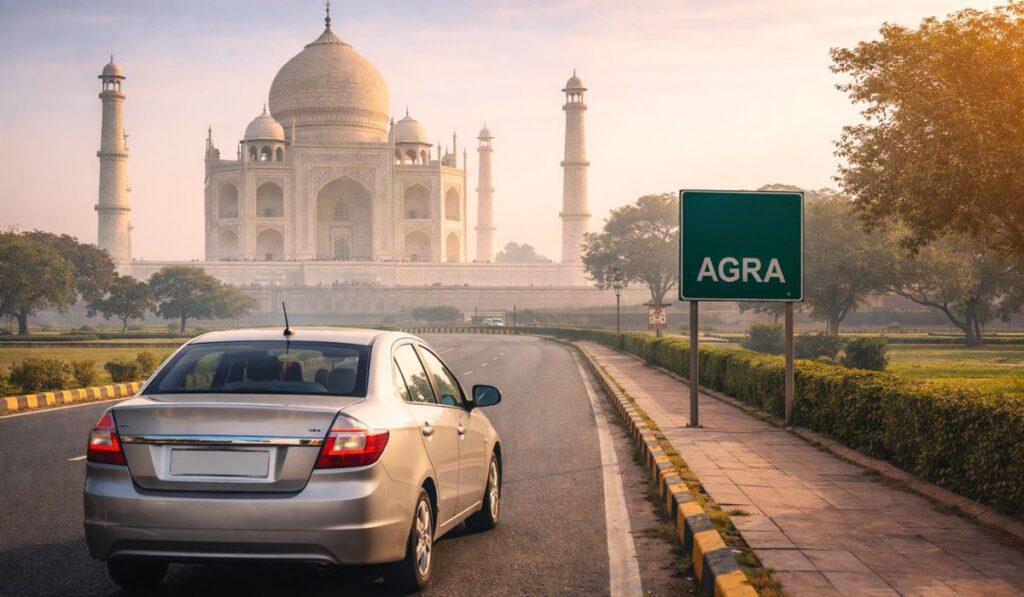
2. Private Vehicle Economics: Unlike a group bus tour, a private car is dedicated solely to your party. You pay for its exclusive use, fuel for nearly 500 km, all highway tolls (which are substantial on this route), and parking fees at multiple sites. The car cannot be used for other revenue-generating work that day.
3. Dedicated Human Resource Commitment: A skilled, experienced driver familiar with the Delhi-Agra corridor is your most critical asset. Their entire day is allocated to you. They must navigate complex traffic, understand monument logistics, and manage timing under pressure. This expertise commands a full-day wage.
4. Time-Locked Operations: The tour operates within the fixed opening hours of the Taj Mahal and Agra Fort. Delays cascade. The operator must build in buffer time and have contingency plans, all of which are factored into the cost structure. This is a precision operation, not a leisurely drive.
In essence, you are paying for a reliable, private transit system with integrated support, designed to deliver you to a timed-entry monument and back within one dawn-to-dusk cycle. The cost reflects the premium on certainty and time savings.
Detailed Cost Breakdown: What You’re Really Paying For
Let’s deconstruct the ~$145 price tag into its component parts. Think of this as the bill of materials for your day.
1. Private Air-Conditioned Car
This is not just a “car rental.” This is a contracted, point-to-point service with full liability.
- Vehicle Cost: A modern, well-maintained sedan (like an Etios, Dzire, or similar) or an SUV for larger groups. Depreciation, insurance, and registration are ongoing costs for the fleet owner.
- Fuel: Approximately 40-45 liters of diesel/petrol for the 450-500 km journey. Subject to volatile fuel prices.
- Tolls: The Yamuna Expressway and other highways impose round-trip tolls of approximately INR 1,200-1,500 ($15-$18) for a car.
- Parking: Fees at the Taj Mahal, Agra Fort, and possibly other stops.
- Driver’s Allowances: Most tours include a pre-paid meal allowance for the driver at Agra, separate from his wage.
2. Full-Day Driver Commitment
Your driver is a professional, not a gig worker.
- Wage: A full-day wage for a skilled, English-speaking, tourism-sector driver familiar with the route and tourist protocols.
- Lodging/Return Logistics: For sunrise tours, drivers often depart from their homes in the early hours (2-3 AM). For all tours, they are responsible for returning the vehicle to its base after a 12+ hour day, regardless of your drop-off time.
- Skill Premium: Knowledge of alternate routes, monument drop-off/pick-up points, and basic coordination with guides is a valued skill set.
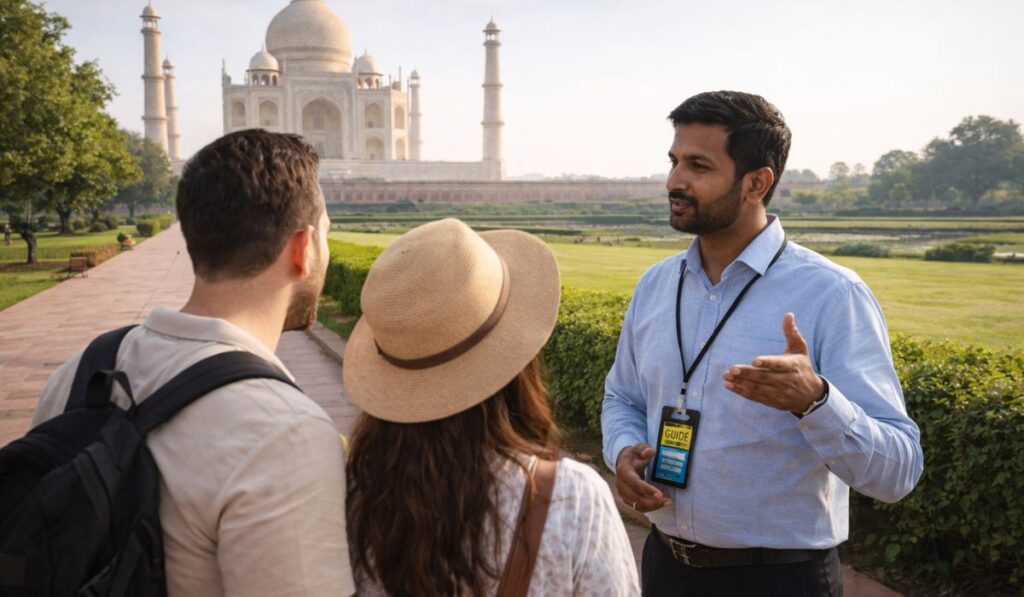
3. Licensed Local Tour Guide in Agra
A government-licensed guide is mandatory for a meaningful experience.
- Half-Day Fee: You pay for a qualified guide’s time (typically 3-4 hours) at the monuments. Their expertise on history, architecture, and photography spots is invaluable.
- Licensing & Training: Reputable operators use only properly licensed guides, who invest in continuous learning and certification.
- Commission-Free Assurance: A guide paid a proper fee by your tour operator has no need to usher you to commission-based shops, protecting your time.
4. On-Ground Coordination & Support
This is the invisible but critical layer.
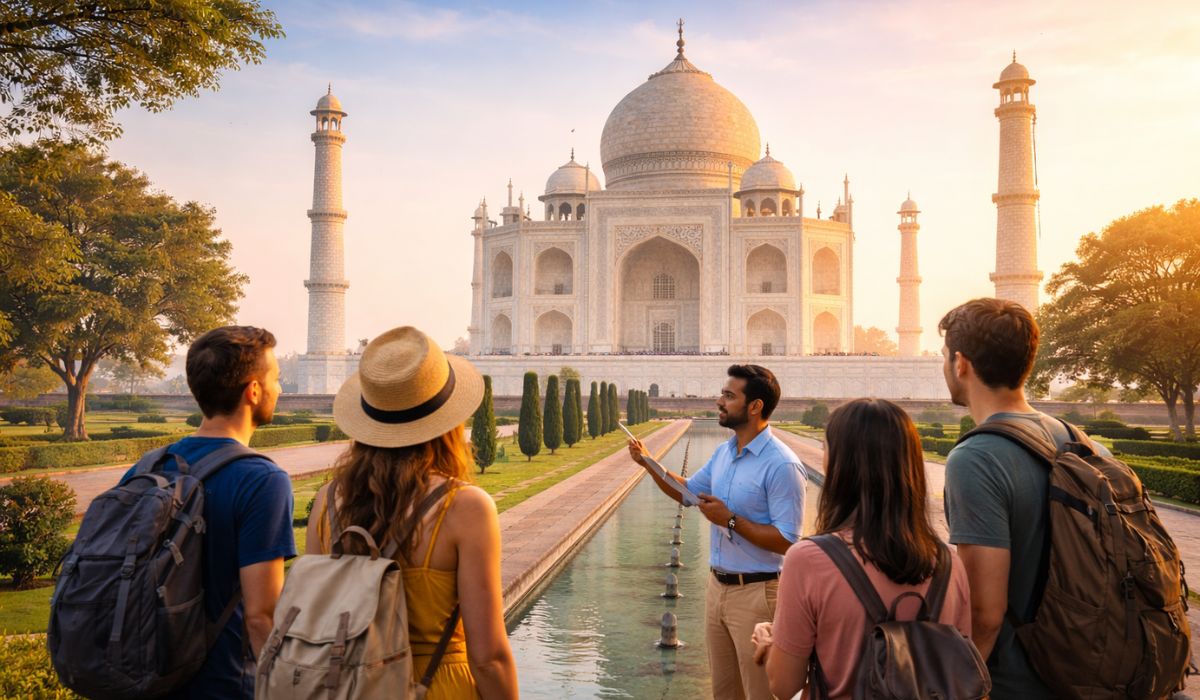
- Agra Representative: Many quality operators have a local Agra-based coordinator who meets you (even briefly) to ensure handoff from driver to guide is smooth, tickets are pre-arranged, and any immediate issues are resolved.
- Real-Time Support: Access to a customer support number that is answered by someone who knows your itinerary and can solve problems in real-time (e.g., vehicle issues, change of plans).
5. Operational Overhead & Business Integrity
This is what separates a professional company from a freelance driver.
- Staff: Dispatchers, customer service agents, quality managers, and accountants.
- Backup Systems: Maintenance of backup vehicles and on-call drivers in case of mechanical failure.
- Insurance & Liability: Proper commercial insurance for passenger liability.
- Secure Payment Systems & Invoicing: The cost of running a legitimate, audited business.
- Profit Margin: A reasonable margin that allows the business to sustain itself, invest in training, and maintain standards.
When you see the cost broken down this way, the price shifts from an abstract number to a logical sum of essential, quality-controlled components engineered for a single purpose: a seamless, stress-free day trip.
Why Sunrise Tours Cost the Same as Standard Day Tours
It’s a common assumption that an earlier start might be cheaper. For a quality operator, it is not. The sunrise tour represents the same, if not greater, operational commitment.
- Earlier, Less Convenient Pickups: A 2:30 – 3:00 AM pickup means the driver must be ready and the coordination team alert hours before normal business hours. This disrupts standard work patterns.
- Higher Demand Time Slot: Viewing the Taj Mahal at sunrise is the most sought-after experience. The operational model is identical to the day tour, so there is no cost saving to pass on.
- Same Operational Lock-In: The vehicle and driver are still committed for a full 12-14 hour day. The tour doesn’t end earlier; it often ends at a similar evening time back in Delhi.
- Driver Welfare & Safety: Ensuring driver rest before an extremely early, long-haul journey requires careful scheduling, which is a management overhead.
The price parity reflects the identical resource commitment, not a lack of value for the premium sunrise experience.
Why Train Tours Cost More
The superfast train option (like the Gatimaan Express) replaces the road journey on the Delhi-Agra legs with rail travel. The higher cost (~$205) is easily justified by a different cost structure.
- Train Ticket Costs: Premium train tickets (Executive Chair Car) are a direct, significant addition. These are purchased at fixed railway rates.
- Dual-City Station Transfers: Instead of one vehicle for the day, you now need two private vehicles with drivers—one for Delhi hotel to Delhi station, and another for Agra station to monuments and back to Agra station. In Delhi, this often requires a very early morning transfer.
- Tighter, Unforgiving Coordination: The tour is now bound by fixed train schedules. Miss the train, and the entire day collapses. This requires flawless timing and adds operational stress. The Agra driver must be waiting at the station upon your arrival.
- Value Proposition: You are paying a premium for reduced road fatigue (more comfortable train ride), guaranteed timeline (train schedules are fixed), and often a slightly later Delhi departure. You trade the flexibility of a private car on the highway for the predictability of rail.
The Uncomfortable Truth: Why Some Tours Cost $80–$100
This is a critical section. If you see a private same-day Taj Mahal tour advertised for under $110 per person (for two), you must understand the trade-offs. These are not “deals”; they are different—often inferior—products.
- Shared or Lower-Grade Vehicles: The “private tour” may covertly become a shared vehicle if other bookings are made, or it may use an older, less reliable, or non-AC car to cut costs.
- Unlicensed or Commission-Based Guides: The guide may not be licensed or may be paid a pittance, expecting to make their income from forced shopping stops. Your 3 hours at the Taj Mahal could be rushed to allocate 45 minutes at a marble “demonstration” shop where high-pressure sales tactics are used. The guide earns a commission on anything you buy.
- Hidden Monument Ticket Charges: The advertised price may exclude the Taj Mahal ticket (a significant ~$20 for foreign tourists), which is then presented as a mandatory extra on the day.
- The Driver-as-Guide Model: To save the guide fee, the driver may be asked to provide commentary, which is illegal at the monuments and provides minimal historical value.
- Lack of Accountability & Support: These tours are often booked via a freelance driver or a bare-bones aggregator. If the car breaks down, there is no backup. If you have a complaint, there is no customer service department.
- Subsidiary Revenue Focus: The operator’s profit may come primarily from the shopping commissions, not from your tour fee. Your experience is secondary to this goal.
This is why choosing a reputable tour operator matters far more than finding the lowest advertised price.
The Risk: Choosing a tour in this price bracket is a gamble. You might get lucky with a decent driver having a good day. But statistically, you are accepting a higher risk of wasted time, high-pressure sales encounters, and a lack of recourse if things go wrong. The ~$145 price point exists precisely to eliminate these risks.
Is the Tour Worth the Price? A Balanced Verdict
This is not a question with a universal answer. It depends entirely on your travel priorities and risk tolerance.
This Tour IS Worth The Price If You:
- Have only one day in your itinerary to see the Taj Mahal.
- Value time efficiency and certainty above all else.
- Are a first-time visitor to India and prefer a managed, pre-arranged experience.
- Want a private, flexible experience without a large group.
- Seek risk reduction—assured AC vehicle, licensed guide, clear itinerary, and professional support.
- Understand that you are paying for logistical engineering, not just transportation.
This Tour Is NOT Worth The Price If You:
- Have multiple days to spare and can travel to Agra independently (by train or bus) and stay overnight at your own pace.
- Are an experienced backpacker on a very tight budget who is comfortable negotiating with local taxi unions, arranging your own guides, and managing unforeseen hiccups.
- Primarily view the Taj Mahal as a single photo opportunity rather than a full-day cultural and historical immersion.
- Disproportionately value the lowest possible monetary cost over time, comfort, and peace of mind.
The Core Proposition: A same-day private tour is not a luxury product. It is a risk-mitigation product. You are investing in a smooth, predictable, and high-probability successful visit to one of the world’s most iconic sites, against a backdrop of potentially chaotic logistics. The price is the fee for that certainty.
Extensive FAQ: Answering Real Objections
Are Taj Mahal entry tickets included?
Yes, in a properly priced tour (~$145+), the ticket for foreign nationals (currently INR 1300, ~$16, as per the official Taj Mahal ticket price) should be included. The guide or representative will typically purchase it for you as you approach. Always confirm this explicitly when booking.
Are there any hidden charges?
With a reputable operator, no. The price should include all monument tickets (Taj Mahal, Agra Fort), private car, driver, guide, tolls, fuel, parking, and taxes. Exclusions are always clearly stated: typically lunch, drinks, and personal gratuities (tips).
Is this safe for solo travelers, especially women?
Yes. Reputable operators are acutely aware of safety concerns. You will have a vetted driver, a licensed guide at the monuments, and constant support contact. A private tour via a professional company is statistically one of the safest ways for any traveler, including solo females, to visit Agra. Ensure the company has verified reviews.
Is tipping mandatory? What’s expected?
Tipping is customary and appreciated, but not mandatory. It is a direct reward for good service. A general guideline: If you are happy with the service, consider INR 500–800 ($6–$10) for the driver and a similar amount for the guide, at the end of the day. It is best given in cash (Indian Rupees).
What happens if there’s major crowding or a delay?
This is the value of a guide and a private driver. Your guide will navigate crowds efficiently. Your driver and the operational team are in contact; if a major delay (like fog or an accident) threatens your return, they will advise you on options (e.g., later return). The fixed cost includes managing these uncertainties.
Can we customize the Agra itinerary slightly?
Within reason, yes. A standard tour covers Taj Mahal and Agra Fort. If you wish to skip Agra Fort for Mehtab Bagh (the viewing park across the river), a professional operator can usually accommodate this request in advance. Major deviations may affect timing and cost.
What is your cancellation policy if I get sick?
This varies by operator but is a critical question to ask. Professional companies offer fair policies, often a full refund if canceled 48–72 hours in advance, with a sliding scale closer to the date. This policy itself is a marker of a legitimate business.
Conclusion: Making a Confident Decision
By now, the price of a same-day Taj Mahal tour should no longer be a mysterious or anxiety-inducing figure. It is a logical sum, built from the concrete costs of distance, time, skilled labor, and operational integrity.
You are not just buying a car ride. You are securing a coordinated system designed to deliver a specific experience within a narrow time window, while systematically removing the common points of failure and frustration associated with this demanding day trip.
The choice, therefore, becomes clearer:
- If your priority is absolute lowest cost and you accept the associated risks and potential time costs, you now know what to look for—and what to be wary of.
- If your priority is a high-probability, seamless, and focused experience that protects your valuable time and mental energy on a short trip, the market price of ~$140-$160 per person is a rational investment.
You have the information. The decision is now about aligning the offering with your personal travel values.
Your Next Step
With this clarity, your next step is not to search for more prices, but to assess specifics. The final cost can vary slightly based on your exact date, group size, and pickup location.
We recommend you take one of these logical, intent-driven actions:
- Check the exact price for your specific travel date and group size.
- Confirm real-time availability for your preferred tour option (Sunrise, Day, or Train).
- See if the standard itinerary and timings fit your schedule and energy levels.
This moves you from price comparison to practical planning, based on a foundation of transparent understanding.