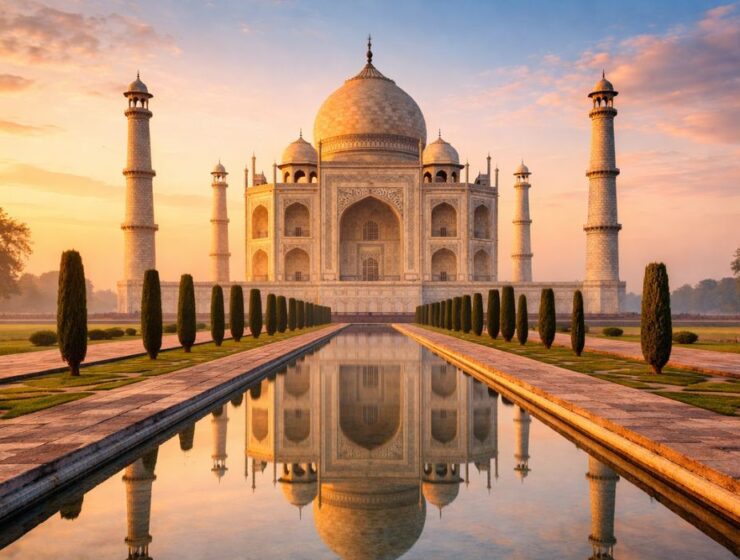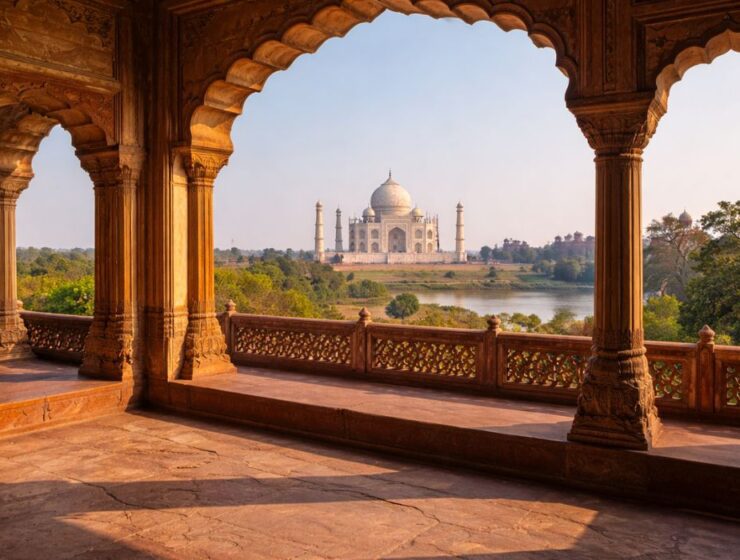
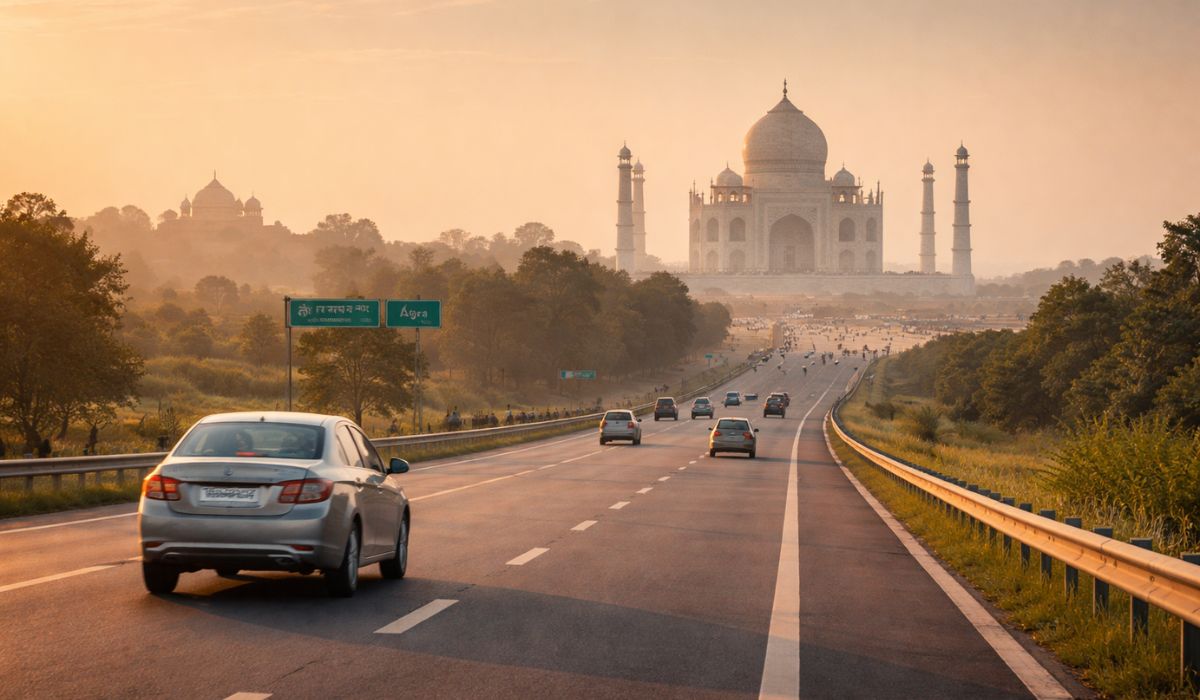
Planning a same-day Agra tour from Delhi is ambitious but doable if you’re prepared. The drive from Delhi to Agra is about 230–250 km (roughly 150 miles) and takes around 4 hours by car. The fastest route is the Yamuna Expressway, a modern toll road that cuts travel time (about 3½–4 hours) and keeps Delhi-Agra traffic to a minimum. Leaving Delhi very early (around 5–6 AM) is crucial: you’ll beat the city’s rush hour and arrive in Agra mid-morning. This means you can explore the Taj Mahal in cooler, less crowded conditions before heading back in the evening. Below is a breakdown of a realistic day-by-day (or rather hour-by-hour) itinerary, plus tips, pros & cons, and other logistics to help you decide if a same-day road trip makes sense for you.
Early Morning Departure from Delhi (4:30–6:00 AM)
- Departure time: Aim to leave Delhi around 5:00 AM (earlier in summer or if you want to catch sunrise in Agra). By 5 AM the city traffic is light, and you can quickly get onto the Yamuna Expressway. The Taj Mahal opens about 30–60 minutes before sunrise (roughly 6:00–6:30 AM). Catching sunrise at the Taj is magical if the skies are clear, but even if you miss it, arriving by 8:00–9:00 AM lets you see the monument with the morning light. Tip: Check if Taj Mahal is closed on the day of travel – it is closed every Friday, so plan around that. Also check Agra’s weather (summer heat or winter fog can affect your timing).
- Route and travel time: The recommended route is via the Yamuna Expressway (165 km high-speed toll road). According to travel guides, this route covers about 233 km in ~3.5 hours. In practice, expect 4 hours on average from Delhi to Agra by car. (If you take the older NH19/NH44 route, it’s longer – over 350 km and 8–9 hours – so stick to the expressway.) The expressway is well-maintained and mostly traffic-free; you’ll cross sections of open fields and small villages.
- Rest stops: The Yamuna Expressway has service areas and food courts. For example, HPMC Coffee Shop (Dauj to Agra stretch) offers breakfast, tea, and clean restrooms. Plan one quick stop (around 7–7:30 AM) to stretch your legs, use a restroom, and grab chai/snacks. You’ll also go through one or two toll booths (keep your FASTag or cash ready). Filling the tank before leaving Delhi is wise, as fuel stations are fewer on the expressway.
- Roadside cautions: Driving early also means you might hit fog patches in winter or morning haze; drive carefully. Watch for traffic near toll plazas or service areas. Overall the journey is straightforward. In summer, air-conditioned comfort will make the ride bearable, but keep water and a light snack in the car in case of delays.
Arrival in Agra and Visiting the Taj Mahal (9:00–11:30 AM)
- Parking and entry: You’ll arrive in Agra city around 8:30–9:00 AM. Follow signs or your GPS to the Taj Mahal’s entry gates. (Local drivers will drop you at the East or West gate where main parking and ticket windows are located.) There are three gates (East, West, South), but most tourists use East or West. Your car can be parked in the official parking lot (often a short walk from the gate). Expect a short wait if many cars arrive at once. Carry exact cash for parking fee (around ₹50–100).
- Tickets and ID: If possible, book Taj Mahal tickets online in advance through the official site (asiagracircle.in) to skip the ticket counter line. Ticket windows open about 1 hour before sunrise, so arriving by 9 AM you should have tickets or can buy them quickly (ticket price is modest: about ₹1100 for foreign adults plus ₹200 extra for the main mausoleum). Remember to carry your passport or valid ID for all travelers (especially Indians need an ID for ticket counters). Small bags are allowed, water bottles are permitted, and if you have a foreigner ticket, shoe covers and bottled water are included.
- What to expect inside: Once inside the gardens, walk up to the white marble mausoleum. You will need to take off your shoes or wear the disposable covers provided before ascending to the marble platform. Plan on spending about 1.5–2 hours at the Taj Mahal, which is enough time to see the main mausoleum, walk the gardens, take photos, and explore the surrounding mosque and guest house. If you enter the mausoleum interior, allow extra time (the line for the main chamber can get long). The marble inlay work and symmetry are worth a slow look. The morning light brings out the glow of the ivory-white marble.
- Crowd patterns: Visiting earlier is better. The Taj Mahal stays quietest right after opening. According to one guide, crowds begin to surge around 10:30–11:00 AM. By late morning, entrance lines grow and the photo spots on the front lawn fill up. If you arrive by 9 AM, you’ll enjoy relatively unobstructed views and cooler temperatures. (Alternatively, some tourists skip sunrise and aim for a late afternoon visit, but then you risk evening traffic on the return and closing times.)
- Guides and extras: There will be touts at the gate offering guide services or photo assistance. Having a guide is optional – the site is self-explanatory with signs. Beware of aggressive vendors. A battery bus or golf cart ride from the gate to the mausoleum is available but usually only for foreign visitors (and can often be skipped if you prefer to walk the 500 m). Inside, no tripods, drones, or big cameras without permit are allowed.
- Tips: Bring sunscreen and a hat if it’s sunny – the gardens have little shade. Wear comfortable walking shoes (remember you’ll remove them at the mausoleum). Keep hydrated. The grounds have drinking water fountains and restrooms near the entrances. Don’t litter. Respect the site as it’s a mausoleum and a UNESCO heritage monument.
Midday Lunch in Agra (11:30 AM–1:00 PM)
After the Taj, most travelers pause for lunch in Agra around 11:30 AM–1:00 PM. A few suggestions:
- Restaurants: There are many eateries near the Taj. Popular casual spots include Pinch of Spice (known for kebabs and North Indian fare) or Esphahan (hotel style dining). If you want a rooftop with a view of the Taj, Hotel Saniya Palace is recommended by some travelers, but it’s pricier and a bit further. For a quick stop, local “dhabas” (roadside restaurants) along the highway or in Old Agra serve thalis and curries.
- Local cuisine: Agra’s specialties include dal chawal (lentils and rice), bedai (spicy fried bread), and petha (a local sweet made from ash gourd). Street-food vendors offer jalebis and samosas. Drink bottled water or bottled chai (tea).
- Rest & recharge: Use this time to recharge electronics, relax in AC, and rest your legs. A taxi or cab can drop you off for lunch and park while you eat. Plan for about 45 minutes to 1 hour for lunch – don’t linger too long, as Agra Fort will close by 5:30 PM. Also, midday in Agra (especially in summer) can be very hot; an air-conditioned restaurant is a good break from the sun.
Afternoon: Agra Fort (1:00–3:00 PM) and Optional Sites
- Visit Agra Fort: A 2–3 PM visit to Agra Fort is ideal after lunch. The Fort is a short drive from the Taj. It’s another UNESCO site with grand red sandstone palaces and courtyards. Tickets are separate (about ₹650 for foreigners, ₹50 for Indians). Inside, highlights include the Diwan-i-Aam (Hall of Public Audience), Diwan-i-Khas, and Jahangir Palace. The fort overlooks the Yamuna river and you can peek at the Taj from certain vantage points. Expect to spend 1–1.5 hours here.
- Opening hours: Agra Fort is open until about 5:30 PM (closing time, except Fridays may vary). You should finish well before closing. The complex is large, so wear comfortable shoes. There are guides at the entrance but again optional.
- Optional – Baby Taj (Itimad-ud-Daulah): If time allows (and if you still have energy), consider a quick stop at the Itimad-ud-Daulah tomb (often called “Baby Taj”). It’s about 10 minutes north of Agra Fort. The Baby Taj is smaller but has lovely marble inlay. Entry fee is modest (about ₹310 for foreigners). However, it’s not essential if you’re pressed for time. Many same-day travelers skip it.
Late Afternoon: Return Journey (3:30–7:30 PM)
- Depart Agra around 3:30–4:00 PM. This gives you about 2–3 hours back to Delhi. You’ll rejoin the Yamuna Expressway which again is fast. Expect a 3.5–4 hour drive back. By departing mid-afternoon you avoid the worst of Agra’s traffic (which is mostly local market traffic, not heavy on expressway). You will hit evening traffic again as you approach Delhi (perhaps around 6–7 PM in Noida/Delhi outskirts), but this is usually manageable compared to morning rush.
- Fuel and breaks: The return also has highway dhabas and restrooms. You might stop again near sunset for a break and tea. Plan on one quick break if needed. Make sure the driver has a rest (if you hired one) as a 7+ hour day is tiring.
- Arrival in Delhi by 7:00–8:00 PM. You’ll likely come back via the expressway to Noida and then into Delhi, arriving home after dark (depending on traffic). The Yamuna Expressway is lit, but once on city roads use caution. In Delhi, expect local traffic, so dinner might be at home or on the way.
- Tiring factors: A one-day round trip is long (around 10–12 hours including drive and touring). You’ll cover ~500 km round-trip, spend many hours sitting and walking. Car trips in India can be bumpy; resting overnight in Delhi afterward is wise.
Delhi to Agra: Car vs Other Options
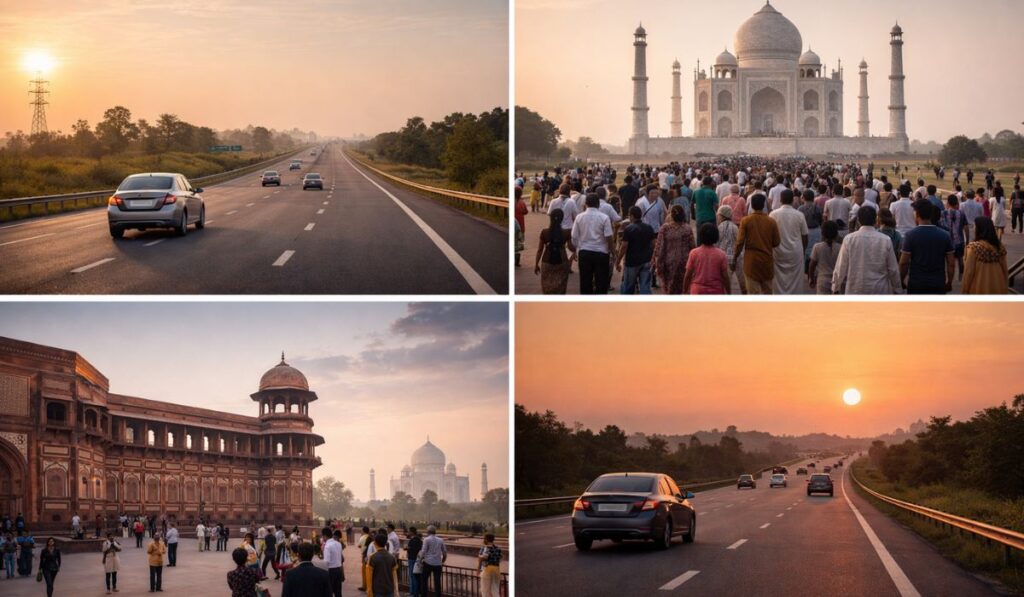
Even though this post is about the car trip, it’s fair to compare briefly:
- Train: The fastest trains (Vande Bharat, Gatimaan) do Delhi–Agra in about 2 hours, which can save time. However, you must reach Delhi’s station early, and in Agra you still need local transport to the Taj. Trains run on fixed schedules (you catch an early train, then catch the evening back train). Train travel is comfortable, but less flexible for sightseeing stops en route.
- Tour Buses/Tours: Many operators offer day trips, but these often run on a fixed schedule, and your time at each monument can feel rushed.
- Self-drive vs private car: If you speak local driving rules and want flexibility, self-driving is an option (though driving in India requires focus on road etiquette). Most foreigners hire a private AC car with driver for the day; this is more comfortable and you avoid having to navigate. There are also one-way rentals that drop you at Agra then pick you back.
Given the above, driving by private car is flexible and convenient (you go at your pace, stop when you want), but it can be tiring and expensive (tolls ~₹300-500 each way plus fuel and driver fee). If budget or fatigue are concerns, the train might be easier (though you lose the “road trip” experience).
Pros and Cons of a Same-Day Car Trip
Pros:
- Flexibility: You control departure and stops (can visit roadside sites, rest whenever).
- Comfort: An AC car is more comfortable than sitting on a bus; you can keep luggage or extra gear.
- Door-to-door: Pickup/Drop from your hotel or home in Delhi. No transfers needed once on road.
- Scenic: You pass through rural Uttar Pradesh landscapes and can see roadside life.
Cons:
- Long Day: ~10+ hours of travel and sightseeing makes for a very long day. You’ll likely be tired.
- Traffic Risk: Even on the expressway, accidents or toll delays can happen. You might hit Delhi traffic twice.
- Cost: Car rental plus tolls and driver tip can add up (often ₹4000–6000 or more for one-way).
- Limited Time in Agra: You must choose priority spots (Taj and Agra Fort are doable, but squeezing anything more is hard).
A common mistake is to start too late. If you leave Delhi after 7 AM, you’ll reach Agra around noon, when it’s hottest and most crowded. By that time you’ll also miss morning light at the Taj. Another mistake is underestimating time: factor in 4–5 hours each way, plus 2+ hours at Taj, 1+ at Fort, plus meals and breaks.
Tips for a Smooth Road Trip
- Book tickets in advance: Taj Mahal tickets can be booked online to skip lines (the official site asiagracircle.in). Do the same for Agra Fort if possible.
- Carry ID: Everyone needs valid ID for entry (passport or driver’s license for Indians).
- Pack light: Only small bags are allowed at the Taj. Leave valuables in the car.
- Stay hydrated and fed: Carry water and snacks in the car. Eat a proper breakfast or at least carry something (breakfast options on the highway are sparse until late morning).
- Dress comfortably: Temperature in Agra can be hot; loose cotton clothes are best. Closed-toe shoes (sneakers) for walking the grounds.
- Sun protection: Hat, sunglasses, sunscreen are important on the open lawns of the Taj and on the drive. The return trip late in day can have glare.
- Timing is key: Try to see the Taj by mid-morning to avoid the worst crowds. Then have lunch and see Agra Fort, so that by 3 PM you are heading back.
- Weekday vs weekend: Weekdays are less crowded. Public holidays and weekends see more local tourists.
- Check local news: On busy travel days there can be highway congestion (like national holidays). Also, check if any protests or roadblocks are planned.
Traffic, Timing, and Crowd Considerations
- Delhi traffic: Exiting Delhi early avoids snarls, but once you return in the evening around 6–8 PM, expect slowdowns near Noida/Delhi border. Plan accordingly.
- Expressway tolls: There are multiple toll booths on the Yamuna Expressway. Keep your FASTag topped up (Indian vehicles can use FASTag for electronic toll).
- Vehicle check: Ensure the car (especially if rented) is in good condition – spare tire, AC working, sufficient fuel. Carry a small first-aid kit.
- Crowds at the Taj: Weekends and national holidays can see lines of thousands. The site caps visitors, but lines at entry and mausoleum can still form. Morning is best; early afternoon can see queues of 30 minutes or more to enter the mausoleum.
- Food breaks: If you’re a tea or masala chai person, pick up cups on the highway. Otherwise, plan a lunch break in Agra before 2 PM, because most restaurants fill up by late afternoon.
Delhi to Agra by Car – What You’ll Experience
On this road trip you’ll witness a slice of North India: the sprawling Delhi suburbs give way to mustard fields and villages as you approach Uttar Pradesh. The Yamuna Expressway is notably smooth – one of India’s best highways – with fast driving. By mid-morning you arrive in Agra, where the sheer size and beauty of the Taj Mahal will likely be the highlight of your day. The marble monument can appear almost luminous in morning light. After soaking in its grandeur, your day continues with local flavors over lunch, and then a stroll through the historic Agra Fort’s red walls. By late afternoon, you’ll be back in the car, reflecting on the Mughal legacy as you head home.
Summary and Conclusion
A same-day Taj Mahal tour by car from Delhi is exciting but demanding. It allows you to maximize time at the Taj, with the flexibility to stop along the way, but it also means a very long day on the road. Key pointers:
- Good choice if: You value flexibility and comfort, and don’t mind a long day. You can (and want to) leave Delhi very early to catch the best light at the Taj.
- Be cautious if: You prefer a relaxed pace, or you’re traveling with young children or in very hot weather. The day trip can be tiring and packed.
In summary, plan to depart Delhi by 5–6 AM, reach Agra by 9 AM, visit the Taj (1–2 hours), have lunch, visit Agra Fort by 3 PM, and drive back to Delhi arriving by early evening. Remember to book tickets, pack essentials (ID, water, snacks), and check that the Taj isn’t closed on your travel day. With good planning, a same-day Agra tour by road can be a rewarding adventure – leaving you with unforgettable memories of the Taj Mahal and Agra’s rich heritage.
Still Confused? These Are the Questions Everyone Asks Before a Same Day Taj Mahal Tour by Car
1. Is a same day Taj Mahal tour by car really possible from Delhi?
Yes, it is possible if you start early and keep the itinerary realistic. The drive from Delhi to Agra via the Yamuna Expressway takes around 3.5–4 hours one way, allowing enough time to visit the Taj Mahal and return the same day.
2. What is the best time to leave Delhi for a same day Agra trip by car?
The ideal departure time is between 4:30 AM and 6:00 AM. Leaving early helps avoid Delhi traffic, reduces crowd pressure at the Taj Mahal, and keeps the day manageable.
3. How long does the Delhi to Agra drive take by car?
Under normal conditions, the drive takes about 4 hours via the Yamuna Expressway. Early morning departures are usually faster, while evening returns can take longer due to traffic near Delhi.
4. Is the Yamuna Expressway safe for early morning or late evening travel?
Yes. The Yamuna Expressway is well-maintained and generally safe. However, drivers should be cautious during winter fog and always follow speed limits and traffic rules.
5. How much time should I plan to spend at the Taj Mahal?
Most travelers spend 1.5 to 2.5 hours at the Taj Mahal. This is enough time to explore the complex, take photos, and visit the main mausoleum without rushing.
6. Do I need to book Taj Mahal tickets in advance?
Booking tickets online in advance is highly recommended, especially during peak season. It saves time and helps avoid long queues at the ticket counters.
7. Can I visit Agra Fort on the same day?
Yes. Agra Fort can be comfortably included in a same day itinerary if time is managed properly. A visit of 1 to 1.5 hours is realistic after lunch.
8. Is a same day Taj Mahal tour by car tiring?
Yes, it can be tiring. The total duration is usually 12–14 hours, including driving and sightseeing. This tour is best for travelers who are prepared for a long but efficient day.
9. Is a car better than a train for a same day Taj Mahal tour?
A car is better for travelers who want flexibility, privacy, and door-to-door comfort. Trains are faster but involve fixed schedules and additional local transport in Agra. The best option depends on travel style.
10. Who should avoid a same day Taj Mahal tour by car?
This tour is not ideal for slow travelers, people who dislike early mornings, or those seeking a relaxed pace. An overnight stay in Agra is a better choice for these travelers.