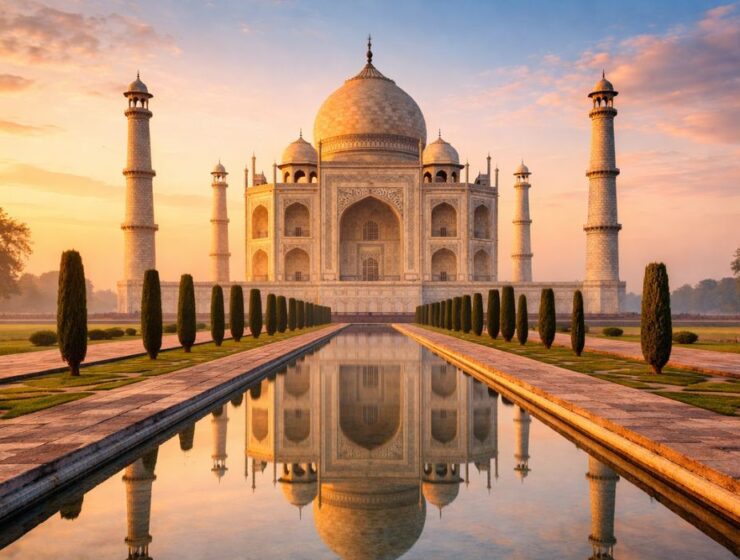
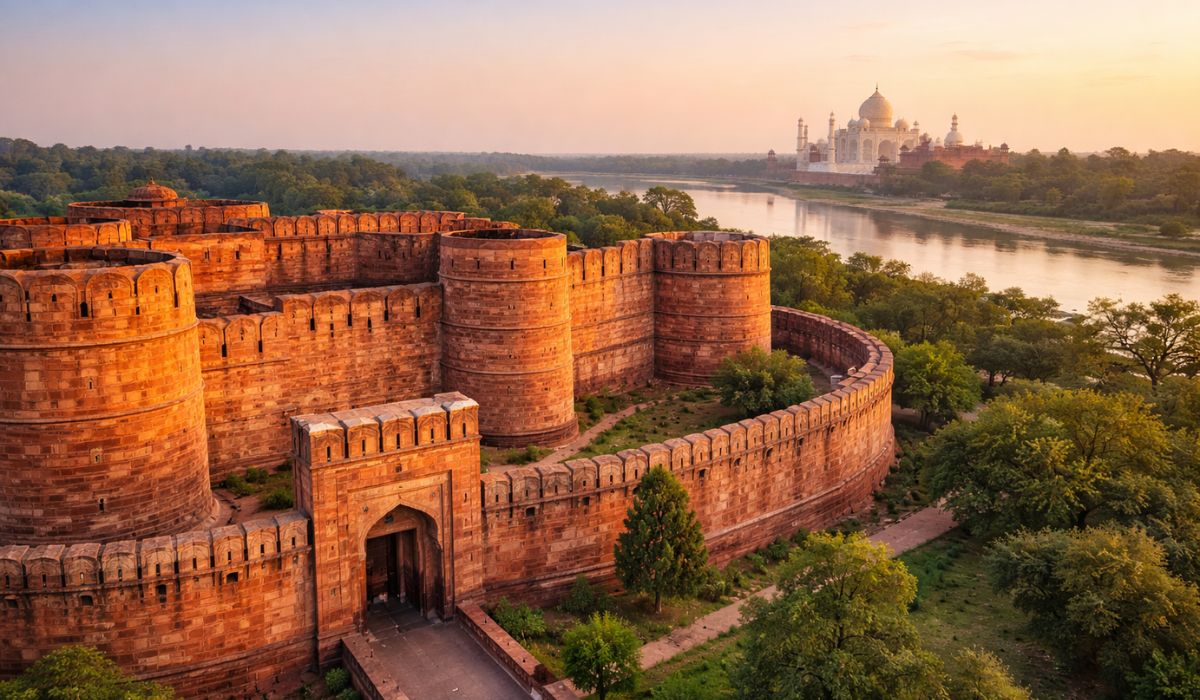
The old man sat by the window every day. For eight years. He’d watch the sun rise over the white marble tomb across the river. He’d watch it set. And then he’d do it again the next day. He built that tomb for his wife. Now he couldn’t visit it. Couldn’t even leave this room.
That man was Shah Jahan. That room was the Musamman Burj in Agra Fort. And that story? It hits everyone differently when they stand there.
Most tourists treat Agra Fort as an afterthought. They spend two hours at the Taj Mahal, then rush through the fort in 45 minutes, snap some photos of red sandstone, and leave wondering what the fuss was about. They completely miss the point.
The Taj Mahal is about love. Agra Fort is about everything that happened after love ended. The betrayal. The power struggle. A son imprisoning his own father. An emperor dying with his eyes fixed on his wife’s memorial.
I’ve walked these corridors more times than I can count. With guests from Mumbai, from London, from Tokyo. And every single time, the fort delivers something the Taj Mahal can’t — the feeling of being inside history, not just looking at it.
This guide tells you exactly what to see, how to avoid the crowds, where the best views hide, and why the Musamman Burj might be the most emotional spot in all of Agra.
Quick Facts — Agra Fort at a Glance
| Detail | Information |
|---|---|
| Location | Rakabganj, Agra |
| Timings | Sunrise to Sunset (approx 6:00 AM – 6:00 PM) |
| Closed on | Open every day |
| Indian ticket | ₹40-50 (slightly less on Fridays) |
| Foreigner ticket | ₹550-650 (plus ₹500 ADA toll if not paid at Taj) |
| SAARC/BIMSTEC ticket | ₹40-90 |
| Video Camera fee | ₹25 |
| Time needed | 2-3 hours minimum for proper experience |
| Distance from Taj Mahal | 2.5 km |
| Distance from Agra Cantt Station | 6 km |
| UNESCO World Heritage status | 1983 |
| Built by | Emperor Akbar (1565-1573), additions by Shah Jahan |
| Architecture style | Mughal (red sandstone + white marble) |
A Brief History — More Than Just a Fortress
Agra Fort isn’t one building from one period. It’s a layered cake of Mughal history, each emperor adding his own touch.
Akbar’s Vision (1565-1573) : When Akbar decided to make Agra his capital, he needed a proper fortress. He demolished an old brick fort called Badalgarh and built this massive structure in red sandstone. Over 4,000 workers labored for eight years. The walls rose 70 feet high, doubled in stone, surrounded by a moat with crocodiles. Nobody was getting in uninvited.
Jahangir’s Additions: Akbar’s son added palaces inside. The Jahangiri Mahal bears his name, though he likely built it for his Rajput wives. This is where the Hindu and Islamic architectural styles started blending — lotus motifs next to geometric patterns.
Shah Jahan’s Marble Obsession: Shah Jahan had different tastes. He loved white marble. So he tore down some of Akbar’s red sandstone structures and rebuilt them in marble. The Diwan-i-Khas, the Musamman Burj, the Khas Mahal — all Shah Jahan’s work. This is also where he spent his final years as a prisoner.
Aurangzeb’s Betrayal: In 1658, Shah Jahan fell ill. His sons fought for the throne. Aurangzeb won, executed his brothers, and imprisoned his father in the very fort Shah Jahan had beautified. The irony wasn’t lost on anyone.
British Occupation: The British used the fort as a garrison. They modified structures, added barracks, and generally treated it like a military installation. Some damage from that period remains visible.
Modern Day: The fort passed to the Archaeological Survey of India after independence. Today, it’s one of India’s most visited monuments — but still plays second fiddle to the Taj.
Why Agra Fort Is More Than Just a Fort
Here’s what most guides won’t tell you: the Taj Mahal is technically a tomb. Beautiful, yes. Emotional, absolutely. But a tomb.
Agra Fort is a living document of Mughal India. Every stone tells a story. Every corridor witnessed something. And one story rises above all others.
Shah Jahan built the Taj Mahal for his wife Mumtaz between 1632 and 1653. Seventeen years of labor, 20,000 workers, unimaginable wealth poured into white marble. When Mumtaz died giving birth to their 14th child, Shah Jahan channeled his grief into architecture.
But here’s the part people forget. Shah Jahan also built the Musamman Burj — that beautiful octagonal tower overlooking the Yamuna. He built it for Mumtaz. She never got to use it.
Instead, their son Aurangzeb used it as a prison for his father.
For eight years, Shah Jahan sat in that tower. The story goes that he had a mirror arranged so he could see the reflection of the Taj Mahal — he was too weak to sit up at the end. He died in 1666, still a prisoner, still looking at the monument he’d built for his wife.
Aamir, one of our senior guides at Emperor Holidays, has been taking visitors to that spot for over a decade. He puts it simply: “Every time I take visitors to Musamman Burj, I ask them to stand exactly where Shah Jahan stood. Look at the Taj Mahal through that window. And then imagine knowing you built that — but you’ll never step inside it again. I’ve seen grown men cry at that spot. Not from sadness exactly. From the weight of it. From understanding what eight years of looking at something you can’t reach actually means.”
That’s why Agra Fort matters. Not for its architecture, though that’s impressive. For its humanity. For the reminder that the people who built these monuments were as complicated, as flawed, as capable of both love and cruelty as we are.
What to See Inside Agra Fort
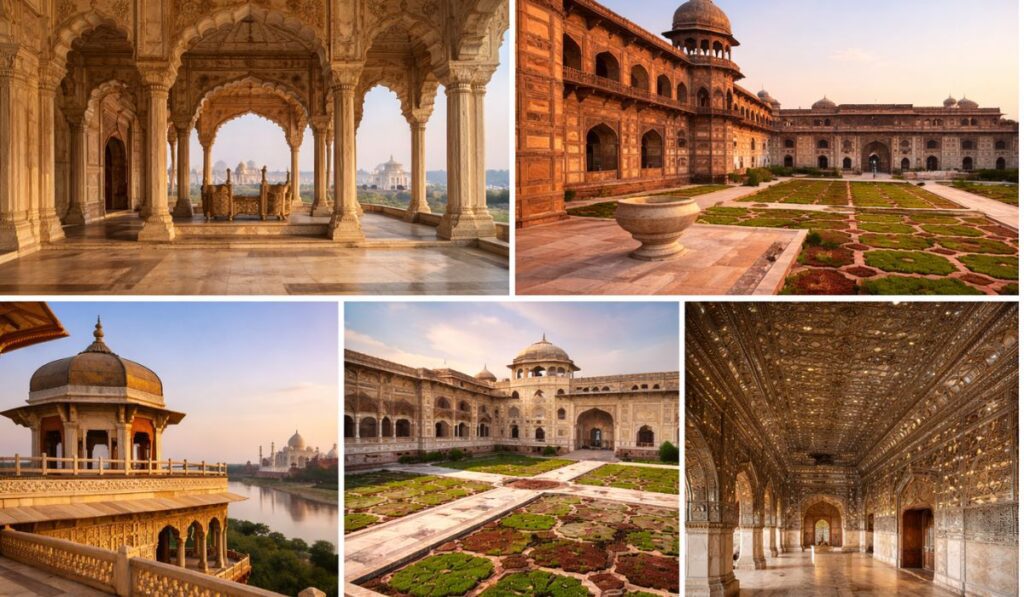
The fort complex sprawls across 94 acres. You can’t see everything in one visit. You shouldn’t try. Here’s what actually matters, in the order that makes sense.
Diwan-i-Aam — Hall of Public Audience
This is where the emperor listened to common people. Ordinary citizens with grievances, merchants with petitions, anyone who managed to get past the guards.
The hall connects to the courtyard through a series of arches. The throne balcony sits high on the wall. The emperor sat there, visible but distant. Ordinary citizens stood below. That distance wasn’t accidental — it was power made physical.
What to notice: the three rows of pillars. The red sandstone carved into intricate patterns. The sense of scale — this hall could hold hundreds.
Time needed: 15 minutes.
Diwan-i-Khas — Hall of Private Audience
This is where the emperor met with nobles, ambassadors, and important visitors. The architecture shifts here — white marble instead of red sandstone. Shah Jahan’s influence.
The famous Persian inscription on the pillars translates to: “If there is a paradise on earth, it is here, it is here, it is here.” Scholars debate whether the line was written about the fort or about India generally. Either way, standing in this hall, you understand the sentiment.
Two black throne bases sit in the center. The Peacock Throne originally stood here — the one covered in jewels, with the Kohinoor diamond, later taken to Delhi and then to Iran by Nadir Shah. What’s left is just the frame. But the proportions tell you everything about Mughal ambition.
What to notice: the marble inlay work. The precise geometric patterns. The way light falls through the arches.
Time needed: 15-20 minutes.
Musamman Burj ⭐ (The Most Important Spot)
This octagonal tower is where Shah Jahan spent his final eight years. Built by Shah Jahan himself for Mumtaz, it later became his prison.
The marble screens filter light beautifully. Carved so thin you can see through them, but thick enough to provide shade. The inlay work here matches the Taj Mahal’s quality — flowers carved from semi-precious stones, each petal precise.
And then there’s the window.
Stand here and look across the river. The Taj Mahal sits perfectly framed. Not too close, not too far. Just there, every single day, from sunrise to sunset.
The room itself is small by palace standards. Intimate. You can imagine an old man sitting here, wrapped in blankets, served by the one daughter allowed to visit him. For eight years.
What to notice: the views. The marble screens. The feeling in the room — quieter than the rest of the fort somehow.
Time needed: 20-25 minutes. Don’t rush this one. Sit if you can. Let the weight of it settle.
Jahangiri Mahal
The largest palace in the fort, built by Akbar for his son Jahangir. Red sandstone dominates here — Akbar’s preferred material.
Massive courtyards open to the sky. Hindu and Islamic architectural elements mixed together — lotus motifs alongside Islamic geometric patterns. Chhatris (small domed pavilions) on the roof. Deep verandas for shade.
What to spot: the huge stone bowls in the courtyard. Used for rose water. The royal ladies bathed in rose water scented with petals. Imagine the scent. the heat. Imagine the privacy of this space, hidden from the rest of the fort.
Also notice the water channels. The Mughals loved running water in their palaces. Engineers brought water from the river using Persian wheels.
Time needed: 20 minutes.
Khas Mahal
Shah Jahan’s private palace, built entirely in white marble. The pietra dura work here is exquisite — flowers carved from semi-precious stones, same technique as the Taj Mahal.
The rooms face the river to catch the breeze. Three parts: the main palace, the golden pavilion, and the Bangali Mahal. The names tell you about the influences — Bengali roof styles mixed with Persian layouts.
The terrace offers another excellent Taj Mahal view. Less crowded than Musamman Burj. Early morning light here is spectacular.
What to notice: the paintings on the walls. Faded now, but once bright with color. Scenes of court life, flowers, geometric patterns.
Time needed: 15 minutes.
Anguri Bagh — The Grape Garden
Just below the Khas Mahal lies a formal garden divided into squares. Mughal gardens followed the charbagh pattern — four parts representing the four rivers of paradise.
The name suggests grapes once grew here. Now it’s manicured grass and pathways. But the view from above — from the Khas Mahal terrace — shows you the pattern clearly.
What to notice: the geometric layout. The water channels. How the garden creates cool air that rises to the palaces above.
Time needed: 10-15 minutes.
Sheesh Mahal — The Palace of Mirrors
Tucked away in the private quarters, the Sheesh Mahal walls are covered with tiny mirrors. The idea was simple: one lamp would reflect thousands of times, filling the room with light.
The mirrors are small — convex pieces set into plaster. Some original, some restored. On a sunny day, light bounces everywhere.
What to notice: the technique. Each mirror individually placed. The effect must have been magical at night.
Time needed: 10 minutes.
Nagina Masjid — The Gem Mosque
A small white marble mosque built by Shah Jahan for the court ladies. They could pray here without leaving the palace complex. The proportions are intimate — smaller than the main mosques, designed for private devotion.
What to notice: the three domes. The simple mihrab (prayer niche). The modesty of the space compared to the palaces around it.
Time needed: 10 minutes.
Moti Masjid — The Pearl Mosque
Shah Jahan’s later addition, named for the pearl-white marble. Three domes, four pillars, pure white inside. The courtyard feels vast after the intimacy of Nagina Masjid.
Aurangzeb prayed here too — the same Aurangzeb who imprisoned his father. History doesn’t record whether he felt guilt walking past the rooms where Shah Jahan sat.
What to notice: the proportions. The absence of decoration — pure architecture, no inlay work, just marble and shadow.
Time needed: 15 minutes.
Agra Fort Entry Ticket Price 2026
Ticket pricing can get confusing because of the ADA toll tax. Here’s exactly what you’ll pay:
| Visitor Category | Ticket Price |
|---|---|
| Indian Citizens | ₹40-50 (₹40 on Fridays) |
| Foreign Tourists | ₹550-650 |
| SAARC/BIMSTEC Nationals | ₹40-90 |
| Video Camera | ₹25 |
| Children under 15 | Free |
Important ADA toll clarification: Foreign tourists pay a ₹500 ADA toll tax (Pathkar). But here’s the thing — if you already paid this at the Taj Mahal earlier the same day, you don’t pay again at Agra Fort. Keep your Taj ticket handy. Show it at the counter.
Ticket counter locations: Main entrance gate. Also a smaller counter near the Amar Singh Gate. Both accept cash and card.
Online booking: The ASI portal (asi.payumoney.com) lets you buy tickets in advance. Same price either way. The advantage? You skip the ticket queue. During peak season (October-March), the ticket line can take 30-45 minutes. Online booking saves that.
Queue times: On-site counter takes 5-10 minutes normally. During peak hours (10 AM – 1 PM), expect 30-45 minute waits. Fridays (Taj closed day) are busier at the fort — everyone shifts here.
Combined tickets: ASI offers a composite ticket covering Taj Mahal, Agra Fort, Fatehpur Sikri, Itmad-ud-Daulah, and Akbar’s Tomb. ₹1000 for foreigners, ₹260 for Indians. Valid for two days. If you’re doing multiple monuments, this saves money and time.
Agra Fort Timings 2026
The fort opens at sunrise and closes at sunset. Sounds simple, but here’s how it actually works:
Winter (October–March): Opens ~6:30 AM, closes ~5:30 PM
Summer (April–September): Opens ~5:30 AM, closes ~7:00 PM
Last entry: Usually 30 minutes before sunset. They start clearing people out then. Guards politely but firmly guide you toward exits.
Best time to visit: Early morning (opening to 9 AM) or late afternoon (3 PM to closing). Light is better for photos. Crowds are thinner. Heat is manageable.
Peak hours: 10 AM – 2 PM. School groups, tour buses, families. The fort gets loud. Guides shout over each other. If you want quiet, avoid these hours.
Light & Sound Show: The fort hosts an evening sound and light show. Two versions — Hindi and English. Timings vary by season. Currently: Hindi show 7:30 PM (winter) or 8:30 PM (summer), English show 8:30 PM (winter) or 9:30 PM (summer). Check at the ticket counter or ask your hotel. Tickets separate — around ₹150-200.
Friday advantage: Taj Mahal is closed on Fridays. Agra Fort remains open. Smart travelers visit the fort on Friday, then do Taj Mahal on Saturday. Fewer crowds at both. Also, Friday ticket prices for Indians drop slightly — ₹40 instead of ₹50.
How to Combine Agra Fort with Taj Mahal
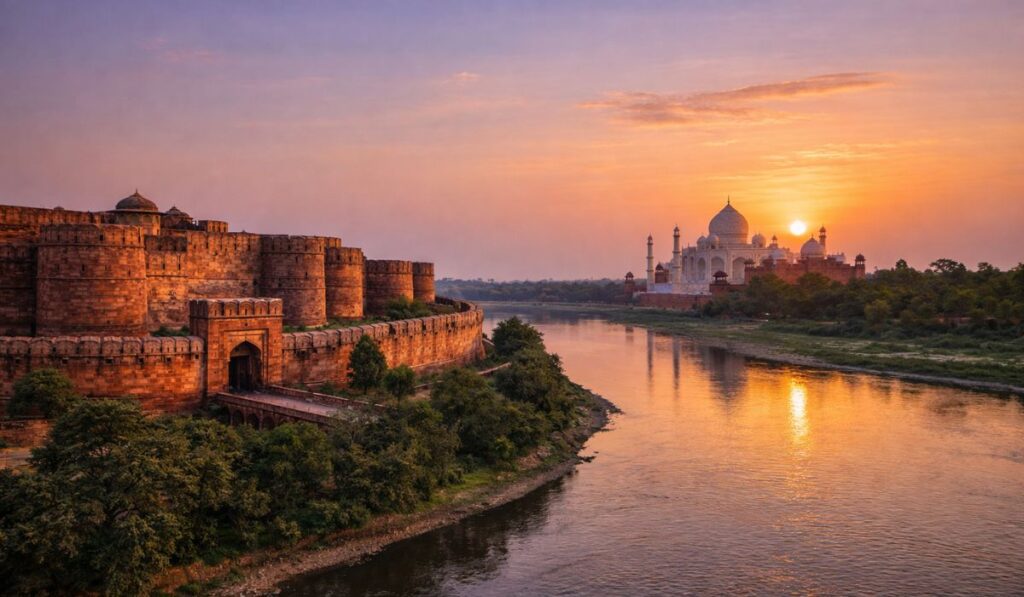
You can do both in one day. The question is whether you should.
Option 1: Same Day Tour (By Car)
5:30 AM – Leave Delhi. Early start beats traffic. The Yamuna Expressway is smooth but boring. Sleep if you can.
8:30 AM – Arrive Agra. Meet your guide. Quick tea if needed.
9:00 AM – Taj Mahal. Two hours inside minimum. Three is better. Walk slow. Sit on the bench. Let it sink in.
11:30 AM – Exit Taj. Head to Agra Fort. Short drive — 10 minutes.
12:00 PM – Agra Fort. Two hours minimum. Three if you want the Musamman Burj experience properly.
2:00 PM – Lunch. Your guide will recommend somewhere clean. Probably a hotel restaurant with AC.
3:00 PM – Optional: Itmad-ud-Daulah (Baby Taj) or local shopping. Marble work, leather, carpets. Depends on energy levels.
4:00 PM – Drive back to Delhi. Evening traffic starts building around 6 PM.
7:30 PM – Arrive Delhi. Tired. But you’ve done it.
This works. It’s efficient. It’s our [same day Taj Mahal tour by car] exactly.
Option 2: Overnight Tour (Recommended)
Day 1 – Arrival
10:00 AM – Arrive Agra. Drop bags at hotel. Freshen up.
11:00 AM – Agra Fort. Two to three hours. Quieter in late morning than you’d expect.
1:30 PM – Late lunch. Local food if you’re adventurous. Hotel food if you’re cautious.
3:00 PM – Itmad-ud-Daulah (Baby Taj). Often called the “jewel box” for a reason. Smaller, quieter, beautiful marble work.
5:00 PM – Mehtab Bagh for sunset. Across the river from Taj Mahal. The view is iconic. Golden light on white marble. Bring camera.
7:30 PM – Dinner. Then rest.
Day 2 – Taj Mahal
5:30 AM – Wake up. Coffee. Go.
6:00 AM – Taj Mahal at sunrise. Gates open. First light hits the marble. Fewer people. Cooler air. This is the moment.
8:30 AM – Back to hotel for breakfast. Shower. Nap if needed.
11:00 AM – Optional: Fatehpur Sikri extension (40 km away). The abandoned Mughal city. Ghost palaces. Worth it if you have energy.
3:00 PM – Lunch.
4:00 PM – Return to Delhi. Arrive around 7:30 PM.
Why overnight is better: You see Agra Fort without rushing. You get sunset at Mehtab Bagh. You experience sunrise at the Taj without crowds. Two completely different moods. The fort in afternoon light. The Taj in morning light. If your schedule allows, spend the night. Our [overnight Agra tour] covers exactly this.
How to Reach Agra Fort
From Taj Mahal: 2.5 km, 10 minutes by auto-rickshaw (₹100-150) or taxi (₹300-400). Walk? Not recommended — the road is busy, no pedestrian path.
From Agra Cantonment Station: 6 km, 15-20 minutes by auto (₹150-200) or taxi (₹400-500). Prepaid auto counters at the station.
From Agra Fort Railway Station: 1.5 km, 5 minutes by auto (₹50-80), 15 minutes walking. This station is closer but fewer trains stop here.
From Idgah Bus Stand: 5 km, 15 minutes by auto (₹120-150). Buses from Delhi, Jaipur, and other cities arrive here.
From Delhi: 233 km via Yamuna Expressway, 3-4 hours by car. Our [Delhi to Agra travel options] page covers trains and buses if you prefer not to drive. Gatimaan Express takes 100 minutes. Shatabdi takes about 2 hours. Both drop you at Agra Cantt.
By air: Agra’s Kheria Airport has limited flights. Mostly from major cities. From airport to fort: 7 km, 20 minutes by taxi (₹500-600). Better to fly into Delhi and drive/train from there.
Practical Tips for Your Visit
What to carry:
- Water bottle (essential — refill available inside)
- Comfortable walking shoes (uneven ground, lots of walking)
- Sunscreen and hat (limited shade in courtyards)
- Sunglasses (glare off marble and sandstone)
- Camera (obviously)
- Valid ID (passport for foreigners, Aadhar for Indians)
- Cash for tickets and tips (cards accepted at counter but not everywhere)
- Small backpack (bags allowed, will be searched)
NOT to carry:
- Large suitcases or bags (lockers available but small)
- Drones (strictly prohibited)
- Food and drinks (outside food not allowed inside)
- Weapons (obviously — security screening at gates)
- Religious items (can cause delays at security)
- Tripods (permit required, otherwise not allowed)
What to wear:
- Comfortable, breathable clothing
- Shoulders and knees covered if you prefer (not strictly enforced but respectful)
- Layers in winter (mornings cold, afternoons warm)
- Scarf or shawl (women — useful for sun protection and modesty)
Security check:
- Two gates with bag screening
- Separate queues for men and women
- Allow extra time during peak hours
- Cameras allowed, video cameras need ticket
- Mobile phones fine
Best time to visit:
- Weather: October to March. Pleasant temperatures, clear skies.
- Crowds: Early morning (6-9 AM) or late afternoon (3-6 PM).
- Light: Golden hour before sunset for warm tones. Morning for crisp shadows.
- Avoid: Midday April-June — temperatures hit 45°C. July-September — monsoon, humid, occasional rain.
With or without guide?
The fort has signboards. English, Hindi, other languages. They tell you what each building is. They don’t tell you the stories.
Without a guide: You’ll see the architecture. You’ll take photos. You’ll spend 1.5 hours and leave.
With a guide: You’ll stand at Musamman Burj and hear about Shah Jahan’s final days. You’ll notice the small details in marble work. Understand why certain rooms face certain directions. You’ll spend 2.5 hours and remember it forever.
Our guides Aamir and Azhar have been walking these grounds for years. Aamir specializes in the human stories — the emperors, the wives, the intrigues. Azhar knows architecture — every inlay technique, every architectural influence. Both speak excellent English. Both will make the fort come alive.
Best photo spots:
- Musamman Burj — Taj Mahal view through window
- Jahangiri Mahal courtyard — red sandstone architecture
- Diwan-i-Khas — marble detail, light and shadow
- Khas Mahal terrace — Taj view, less crowded
- Anguri Bagh — garden patterns from above
Book Your Agra Tour
You’ve read about Shah Jahan’s prison. About the paradise inscription. About the window where an emperor watched his wife’s tomb for eight years.
Now come see it for yourself.
Emperor Holidays has been running Agra tours since 2009. We’re based in Agra — Taj Ganj area, right where the action is. No Delhi middlemen. No third-party operators. Just us, our guides, and our guests.
Our guides Aamir and Azhar know every corner of this fort. Every stone has a story they’ve told hundreds of times. They never get bored of it. Neither will you.
343+ TripAdvisor reviews don’t lie. Read them. See what our guests say about the fort experience specifically.
Same Day Agra Tour by Car – $120 per person
Perfect for tight schedules. Covers Taj Mahal, Agra Fort, lunch, and round-trip from Delhi. Private AC car. Expert guide. No hidden costs.
Overnight Agra Tour – $80 per person
Our recommended option. Two days, one night. Includes 3-star hotel (upgrades available), breakfast, guide, Mehtab Bagh sunset, and sunrise at Taj Mahal. More relaxed. More memorable.
Sunrise Taj Mahal Tour – $285 per person
Premium experience. Early access to Taj Mahal views. Private guide. Luxury transport. Fine dining options. For special occasions or serious photographers.
Same Day by Train – $290 per person
Gatimaan Express both ways. 100 minutes each way. Breakfast and lunch included. Guide meets you at Agra Cantt. Smooth, fast, and uniquely Indian.
Book directly through our website. Or message us. We’ll tailor the day to what you want to see. Want to spend extra time at Musamman Burj? Done. Want to skip the shopping? No problem. Want a specific guide? We’ll arrange it.
Nearby Attractions
Taj Mahal – 2.5 km. Obviously. But you knew that.
Itmad-ud-Daulah (Baby Taj) – 4 km. Often called the “jewel box.” Smaller than the Taj but beautiful marble inlay. Quieter too.
Mehtab Bagh – 3 km across the river. Sunset views of Taj Mahal. Perfect for photos. Bring mosquito repellent.
Akbar’s Tomb – 10 km in Sikandra. The emperor’s final resting place. Red sandstone and marble. Deer in the gardens. Peaceful.
Fatehpur Sikri – 40 km. Abandoned Mughal city. Ghost palaces. Buland Darwaza gate is spectacular. Half-day trip.
Kinari Bazaar – 1.5 km from fort. Old Agra. Narrow lanes. Spices, sweets, marble souvenirs. Chaotic but real.
Related Guides
- Planning your Agra visit? These will help:
- → Taj Mahal Entry Ticket Price 2026 — Indians & Foreigners
- → Best Time to Visit Taj Mahal — Month by Month Guide
- → Delhi to Taj Mahal — Car, Train & All Options Explained
FAQ
Q1: Is Agra Fort worth visiting after seeing the Taj Mahal?
Absolutely. The Taj Mahal is one mood — love, loss, beauty. Agra Fort is another mood entirely — power, betrayal, history. They complete each other. Most visitors who skip the fort regret it later. The fort gives context to the Taj. You understand Shah Jahan better after standing where he was imprisoned.
Q2: How long does it take to see Agra Fort properly?
Two to three hours minimum. You can rush it in one hour if you only hit the highlights — Diwan-i-Aam, Diwan-i-Khas, Musamman Burj — but you’ll miss the details. Two hours lets you sit at Musamman Burj for a few minutes. That’s worth the extra time. Three hours lets you explore the quieter corners.
Q3: Can I visit without a guide?
Yes. Signboards explain the main structures. The paths are clear. But here’s the thing — the signboards won’t tell you which window Shah Jahan used. They won’t point out the small details in the marble work. They won’t explain why certain rooms face certain directions. A good guide adds layers. Aamir and Azhar are good guides.
Q4: Is Agra Fort bigger than the Taj Mahal?
The fort complex is much larger — 94 acres versus roughly 42 acres for the Taj complex. But they’re different types of structures. A fortress versus a tomb. Both impressive in their own way. The fort walls alone are 2.5 km around.
Q5: What’s the best spot for photos inside?
Musamman Burj for Taj Mahal views. Jahangiri Mahal for red sandstone architecture. Diwan-i-Khas for marble detail. Late afternoon light makes everything look better. If you want people-free shots, go early morning.
Q6: Can I buy food inside?
Small snack stalls near entrance. Chai, biscuits, packaged chips. Better to eat before or after. Full meals available outside.