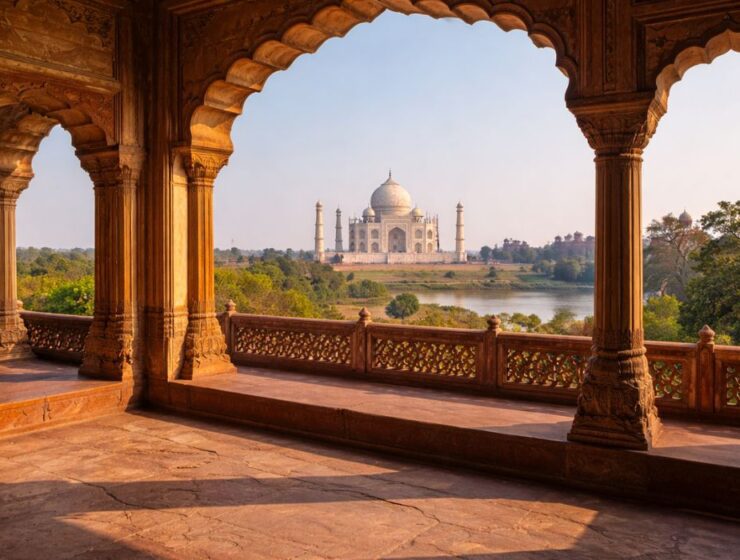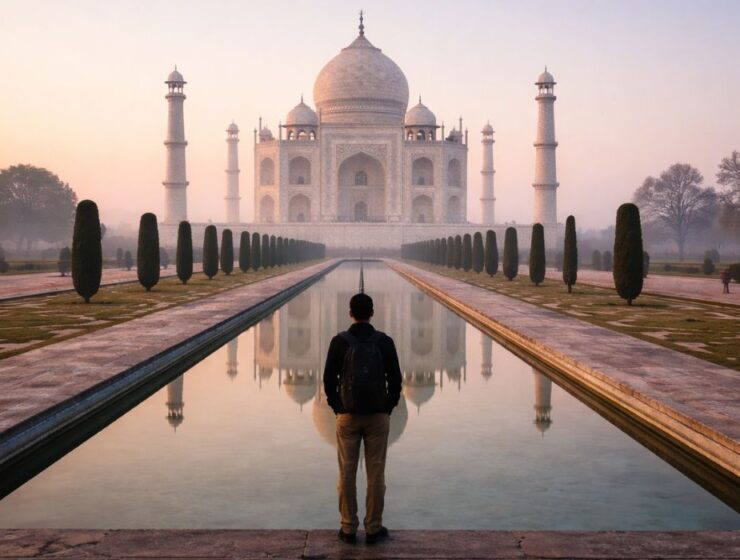
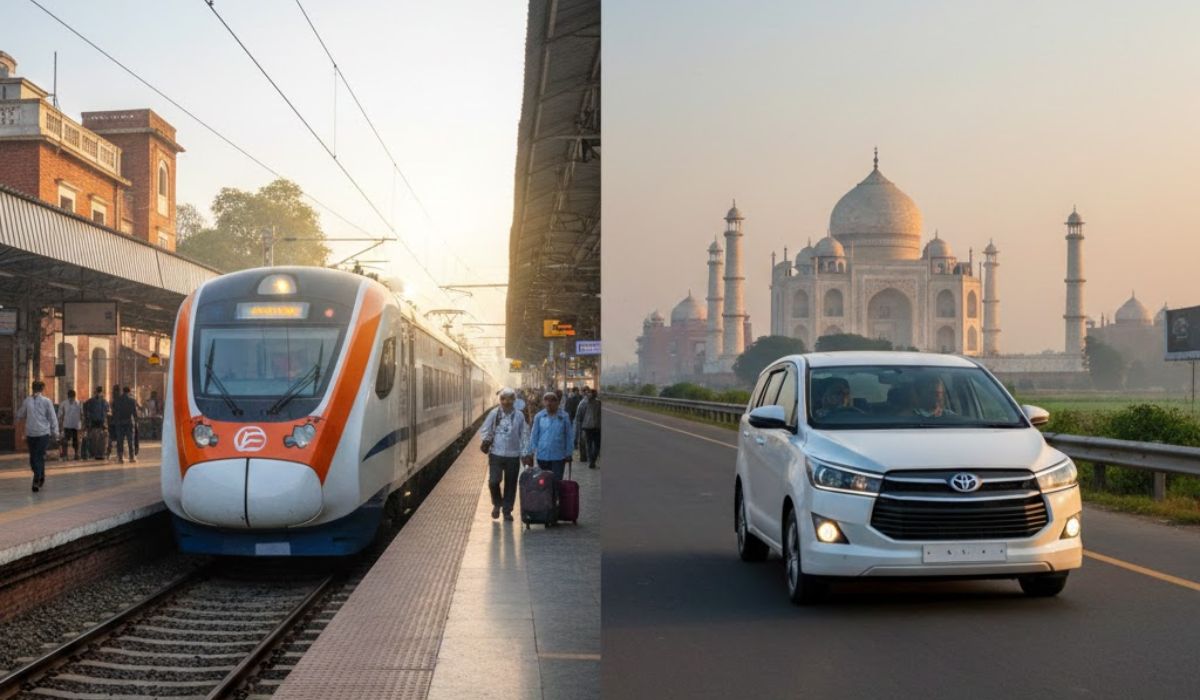
Planning a one-day trip to see the Taj Mahal from Delhi? The first decision you’ll face is how to get there. Most travelers narrow it down to two options: hiring a private car or taking the train. Both work, but choosing the wrong one for your situation can turn an exciting day into a stressful experience. Miss a train connection, and you might lose two hours of sightseeing time. Choose a long car ride when you’re not comfortable sitting that long, and the journey becomes exhausting. This guide breaks down the real differences between car and train travel to Agra, so you can pick the option that actually fits your schedule, budget, and travel style.
Table of Contents
- Quick Comparison: Car vs Train for One-Day Agra Trip
- Traveling to Agra by Train – Who Is It Best For?
- Traveling to Agra by Car – Comfort vs Flexibility
- Time & Cost Comparison: What Actually Matters
- Sunrise Taj Mahal Visit: Train or Car?
- Final Recommendation: Which Option Should You Choose
- FAQs
Quick Comparison: Car vs Train for One-Day Agra Trip
| Factor | Train | Car |
|---|---|---|
| Total Travel Time | 4–5 hours (including station transfers) | 6–7 hours (round trip on road) |
| Flexibility | Fixed departure and return times | Complete control over schedule |
| Comfort | Depends on train class; AC options available | Private, air-conditioned throughout |
| Pickup & Drop | Need separate transfers to/from stations | Door-to-door service from hotel |
| Best For | Solo travelers, budget-conscious visitors | Families, seniors, groups, foreign tourists |
| Main Limitation | Rigid schedule, risk of delays | Longer sitting time, higher cost |
Both options work for a same-day visit, but they serve different types of travelers. Train travel is faster on paper but requires you to stick to fixed timings and handle station logistics. Car travel takes longer but removes the pressure of catching specific departures and gives you complete freedom over your day.
Traveling to Agra by Train – Who Is It Best For?
Most same-day train trips follow a similar pattern. You take an early morning express train from Delhi (usually between 6 AM and 8 AM), arrive in Agra within two to three hours, spend the day visiting the Taj Mahal and other monuments, then catch an evening train back to Delhi.
The appeal is clear: trains are faster than driving, and they’re usually cheaper. You avoid sitting in traffic, and the train itself is comfortable if you book the right class. For solo travelers or couples on a budget, this makes practical sense.
But there are real limitations. Your entire day is built around two fixed train times. If your train gets delayed (which happens), you lose sightseeing time. Once you arrive at Agra Cantt station, you still need to arrange local transport to reach the Taj Mahal, which is about 5–6 km away. The same applies on your return—you need to leave the monuments early enough to reach the station, go through security, and board on time.
This option works best for experienced travelers who are comfortable navigating stations, don’t mind working within a fixed schedule, and want to minimize cost. If you’re someone who values predictability and doesn’t want the stress of catching trains, this might not be ideal. For travelers exploring structured itineraries, options like a same day Taj Mahal tour by train handle all logistics including station transfers and guide services.
Traveling to Agra by Car – Who Should Choose This Option?
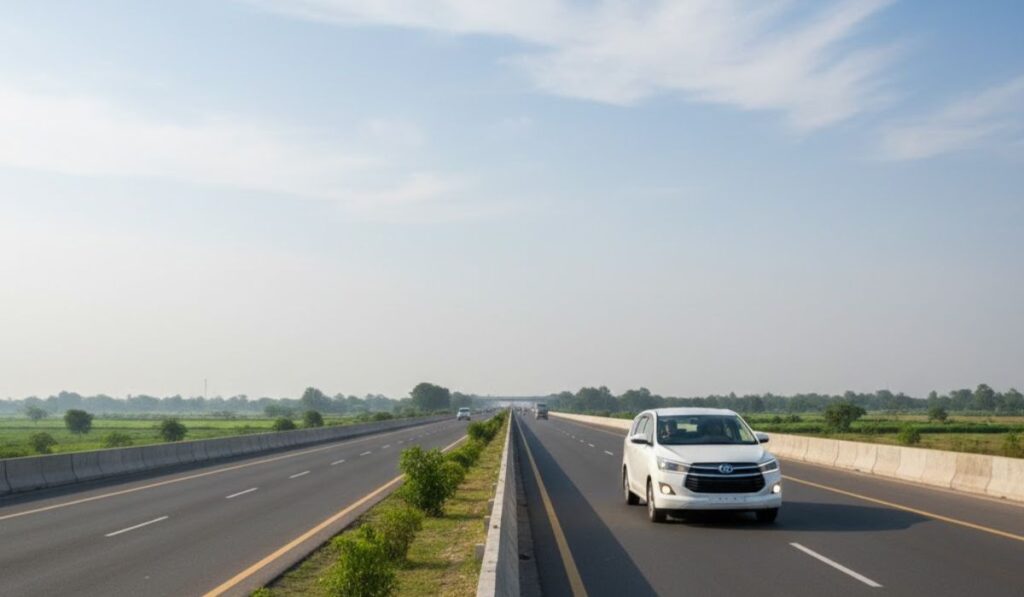
Car travel is fundamentally different. A private vehicle picks you up from your hotel in Delhi, drives you directly to Agra (about 3–3.5 hours depending on traffic), waits while you explore, and brings you back to Delhi. Everything happens on your timeline.
This is the most flexible option. Want to leave at 5 AM for a sunrise visit? Done. Need to stop for a breakfast break on the highway? No problem. Realize you want to spend an extra hour at the Taj Mahal? You can adjust without worrying about missing a train. Your driver stays with you throughout the day, so there’s no stress about finding transport between monuments or getting back to a station on time.
For families, seniors, or foreign tourists visiting India for the first time, this is usually the better choice. You have a private, air-conditioned space for the entire journey. If someone needs a rest, you can adjust. If your group wants to visit an extra site like Agra Fort or Mehtab Bagh, you simply tell the driver.
The downside is time and cost. You’ll spend about 6–7 hours on the road in total, which is tiring for some people. Car rentals with drivers also cost more than train tickets. But for most travelers—especially those in groups of 3–4 people—the convenience justifies the price difference.
If comfort and flexibility matter to you, consider exploring same day Agra tour by car options that include an experienced driver and guide. For visitors who prefer a more premium experience, luxury Taj Mahal day tours offer high-end vehicles and personalized service.
Time & Cost Comparison: What Actually Matters in One Day
When you’re working with just one day, time management becomes critical. On paper, train travel looks faster—2 to 3 hours each way compared to 3 to 3.5 hours by car. But those numbers don’t tell the full story.
With train travel, you need to factor in getting to the Delhi station (30–45 minutes depending on where you’re staying), arriving early for security and boarding (at least 20–30 minutes), and then arranging transport from Agra Cantt station to the Taj Mahal (another 20–30 minutes). The same process repeats on your return. When you add it all up, your total “travel time” is closer to 5 hours, and you’re still working within rigid departure windows.
Car travel is slower in terms of pure driving time, but it’s predictable. You know exactly when you’ll leave, when you’ll arrive, and when you’ll return. There are no missed connections, no waiting at platforms, and no need to rush back to catch a specific train.
Cost is another consideration. Train tickets for AC classes typically range from ₹500 to ₹1,500 per person depending on the train and class. But you’ll also pay for local transfers in Agra (₹500–₹1,000 for a cab or auto-rickshaw for the day), guide fees if needed, and potentially parking or entry logistics. For a group of three or four people, these costs add up quickly.
Private car rentals generally range from ₹3,000 to ₹8,000 for the full day depending on the vehicle type and inclusions. When split among multiple travelers, the per-person cost becomes comparable to train travel—but with far more convenience.
The real question isn’t which is cheaper. It’s which gives you more value for the limited time you have.
Sunrise Taj Mahal Visit: Train or Car?
Sunrise at the Taj Mahal is one of the most memorable experiences you can have. The monument opens at dawn, and the soft morning light creates a completely different atmosphere compared to midday visits. The crowds are smaller, the temperature is cooler, and the marble seems to glow.
But managing a sunrise visit from Delhi requires careful planning. The Taj Mahal typically opens around 6 AM (exact time varies by season). To be there at sunrise, you need to leave Delhi by 2:30 AM or 3 AM at the latest.
No regular trains run at that hour. The earliest express trains from Delhi leave around 6 AM, which means you’d arrive in Agra mid-morning—well after sunrise. Some travelers try to work around this by staying overnight in Agra the night before, but that defeats the purpose of a same-day trip.
Car travel is the only practical option for sunrise visits. Your driver picks you up from your hotel in the early morning hours, drives you directly to Agra, and has you at the Taj Mahal gates right when they open. You experience the monument at its best, then have the rest of the day to explore other sites or head back to Delhi at your own pace.
There is one scenario where train travel can work for sunrise visits: if you’re willing to take an evening train the day before, stay overnight in Agra, visit the Taj Mahal at sunrise, and return to Delhi later that morning. But this turns your “one-day trip” into an overnight journey.
Final Recommendation: Which Option Should YOU Choose?
Your choice depends on what matters most to you. Here’s how to decide:
Choose car travel if you are:
- Traveling with family, seniors, or children who need flexibility and comfort
- A foreign tourist visiting India for the first time and unfamiliar with train systems
- Planning a sunrise visit to the Taj Mahal
- Part of a group of 3–4 people (cost becomes comparable per person)
- Someone who values door-to-door convenience and control over your schedule
Choose train travel if you are:
- A solo traveler or couple looking to minimize costs
- Comfortable navigating train stations and handling local transport in Agra
- Okay with working within fixed departure and return times
- An experienced traveler who prefers faster transit time over flexibility
- Not interested in sunrise visits or very early departures
For most travelers—especially families and foreign tourists—car travel offers better value despite the higher upfront cost. The flexibility, comfort, and stress-free logistics make the day more enjoyable. But if you’re budget-conscious, traveling solo, and comfortable with structured schedules, train travel works perfectly well.
There’s no universally “better” option. The right choice is the one that matches your priorities.
FAQs
Is one day enough to visit the Taj Mahal from Delhi?
Yes, one day is enough to visit the Taj Mahal and even explore 1–2 additional sites like Agra Fort. Both car and train options allow sufficient time in Agra for a meaningful visit. You’ll spend 4–6 hours in Agra itself, which is enough to see the main monuments without feeling rushed.
Can I do a sunrise Taj Mahal tour by train?
Not practically. The earliest trains from Delhi arrive in Agra mid-morning, well after sunrise. If you want to experience the Taj Mahal at sunrise, car travel is the only realistic option for a same-day trip from Delhi.
Is car travel from Delhi to Agra safe?
Yes. The Yamuna Expressway connecting Delhi and Agra is a modern, well-maintained highway. Most tour operators provide experienced drivers who are familiar with the route. The road is busy during the day, which adds to safety, and the journey is straightforward.
What if my train gets delayed?
Train delays do happen, especially during fog season (December–January) or monsoon. If your morning train is delayed, you lose sightseeing time in Agra. If your return train is delayed, you get back to Delhi later than planned. This is the main risk of train travel. Car travel eliminates this uncertainty.
Which option is better for foreign tourists?
Car travel is generally better for foreign tourists. You don’t need to navigate unfamiliar train stations, deal with local transport in Agra, or worry about language barriers. Everything is handled for you. The door-to-door service and flexibility make the experience much less stressful, especially if it’s your first time in India.
Ready to Plan Your Taj Mahal Visit?
Now that you understand the real differences between car and train travel, you can make the choice that fits your needs.
If comfort and flexibility are your priority, explore private car tour options that include an experienced driver, air-conditioned transport, and the freedom to set your own schedule.
If you prefer a budget-friendly option with faster transit times and are comfortable with fixed schedules, train-based tours offer good value with all logistics pre-arranged.
Both options give you a full day to experience the Taj Mahal. The difference is in how you get there and how much control you have over your day.